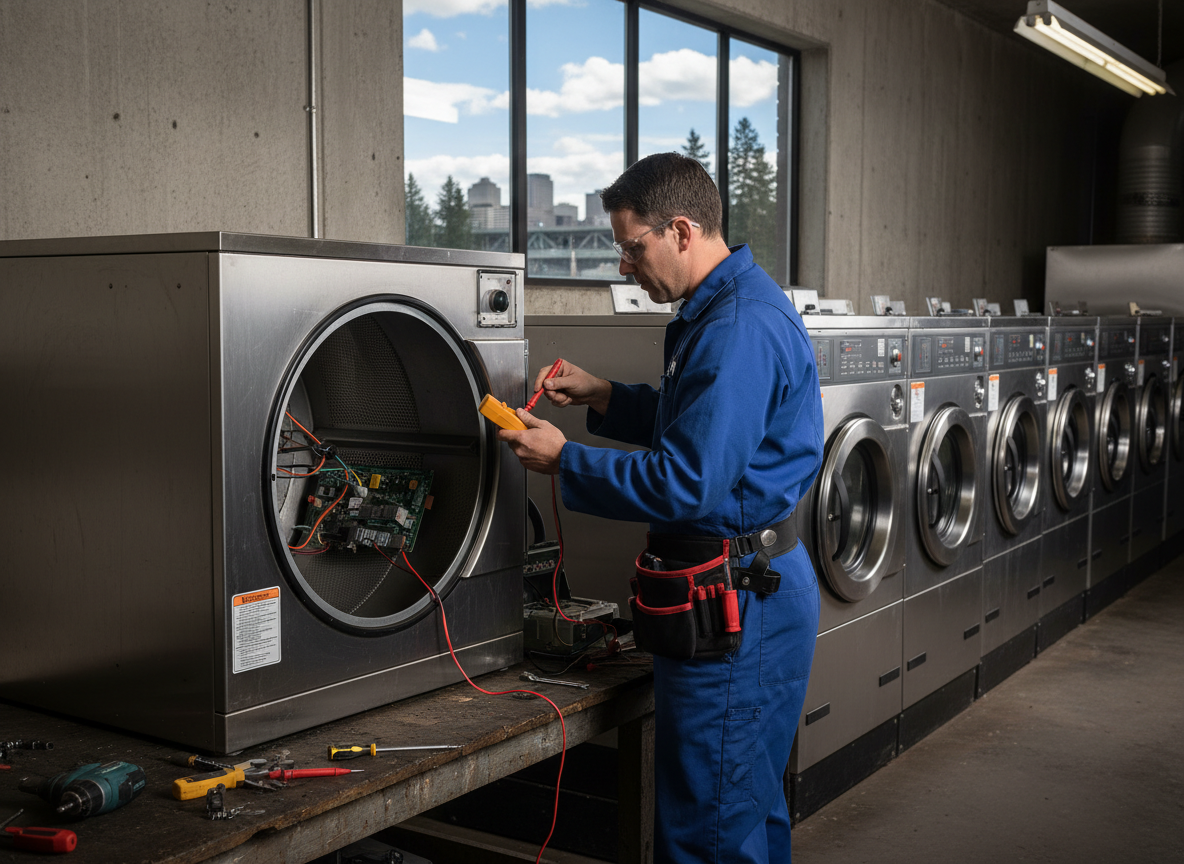
Commercial dryer repair begins with a systematic check of symptoms such as no heat, failure to tumble, or extended drying times. Technicians test the heating element, drive motor, rollers, and thermostats to pinpoint the cause before any parts are ordered or replaced.
Common failure symptoms in Spokane include lint buildup from heavy use in restaurants and laundromats, plus wear on belts and bearings from continuous operation. Older commercial buildings often have 240-volt circuits that can contribute to inconsistent performance when connections loosen over time.
Components frequently tested are the high-limit thermostat, igniter on gas models, blower wheel, and drum support rollers. Each part is checked with a multimeter or visual inspection so the repair targets the actual fault rather than guessing.
Repair-versus-replace decisions depend on the age of the dryer, cost of the needed parts, and how many hours the unit runs each week. When a major component such as the motor fails on an older machine, replacement of the entire dryer can be the more economical choice for the business.
Before service, customers should clear a path to the dryer, note any error codes displayed, and have the model number ready. This preparation helps the technician move directly to testing rather than spending time on access or record-keeping.
Preparing Your Commercial Dryer for Service
Turn off the breaker and disconnect the gas line if applicable. Remove any laundry and lint from the drum so internal components are visible during the initial inspection.
Technician insight
In Spokane, the thing that catches most people out with Commercial Dryer Repair is the combination of older commercial buildings and long, cold winters that push dryers harder than in milder climates. Extra lint from winter clothing plus aging 240-volt wiring often turns what looks like a simple belt job into a full electrical check.
Restaurant Dryer Stops Mid-Cycle
A commercial dryer at a Spokane restaurant stopped producing heat during peak hours. Testing showed a failed high-limit thermostat caused by restricted venting from heavy winter use. The thermostat was replaced and the vent cleared, returning the unit to full operation without replacing the entire machine.
Commercial Dryer Repair Services We Offer
✓Drum Roller Replacement
Worn rollers cause thumping and uneven tumbling; replacing them restores smooth rotation and reduces stress on the motor.
✓Heating Element Testing
A failed element stops heat production; testing confirms whether repair or full replacement is required for consistent drying cycles.
✓Drive Belt Service
Stretched or broken belts halt drum movement; proper tensioning and replacement prevent slippage during heavy commercial loads.
✓Thermostat Calibration
Inaccurate thermostats lead to overheating or insufficient heat; calibration ensures safe operating temperatures and energy efficiency.
✓Blower Wheel Inspection
Damaged or clogged blower wheels reduce airflow; cleaning or replacement improves drying speed and lowers fire risk from lint.
✓Ignition System Diagnostics
Gas dryers that fail to light often need igniter or valve checks; targeted diagnostics restore reliable startup without unnecessary part swaps.
How it works
- 1
Symptom Review
The technician discusses observed issues and checks for error codes or recent changes in operation.
- 2
Component Testing
Each major part is tested with appropriate tools to isolate the fault without guesswork.
- 3
Repair Execution
Needed parts are installed or adjustments made while keeping the workspace clean.
- 4
Function Verification
The dryer is run through a full cycle to confirm the repair resolved the original symptoms.
- 5
Customer Walkthrough
Findings, any remaining options, and basic maintenance steps are explained before leaving the site.
Pricing
Cost varies with the parts required and time spent testing multiple components on commercial units.