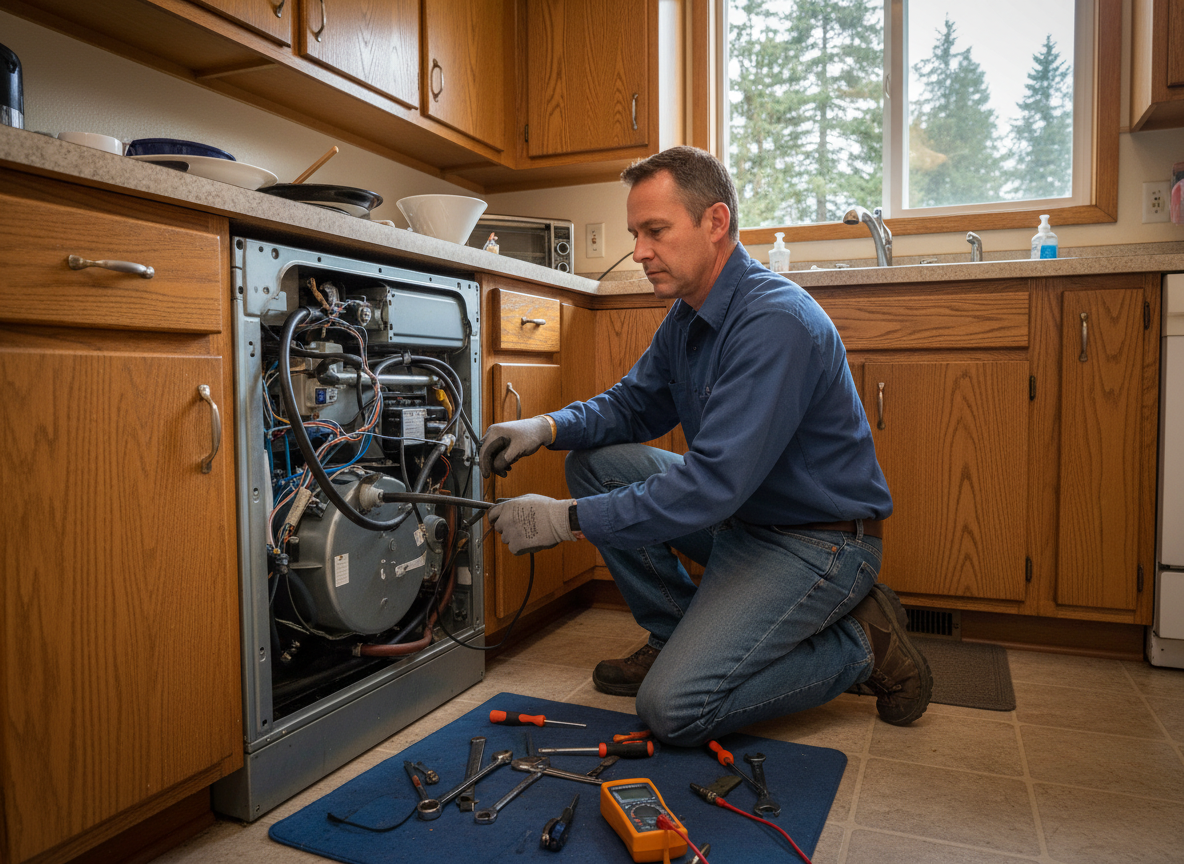
Diagnosis begins with listening to the appliance run, checking error codes if present, and testing voltage and resistance at key components. Common failure symptoms include unusual noises, failure to start, inconsistent temperatures, water leaks, or error lights that stay on. Technicians check items such as compressors, heating elements, control boards, pumps, motors, and seals to pinpoint the cause.
Repair versus replace decisions weigh the age of the unit, cost of parts and labor, and how often the appliance is used. In many Spokane homes built before 1990, older wiring and hard water deposits accelerate wear on heating elements and pumps, making replacement the practical choice once multiple parts fail at once.
Before service, customers should clear a path to the appliance, note any recent changes in performance, and have the model number ready. This lets the tech test the right components without delays and provide an upfront explanation of options.
Common Components Tested During Appliance Repair
Technicians measure compressor windings, check thermostat continuity, inspect door gaskets for gaps, test drain pumps for blockages, and verify control board output voltages. These checks determine whether a single part or a broader system issue is at fault.
What Homeowners Should Prepare
Move nearby items away from the appliance, note the last time it worked properly, and list any unusual sounds or smells. Having the manual or model sticker visible helps confirm compatible replacement parts without extra trips.
Technician insight
In Spokane the thing that catches most people out with appliance repair is older homes with aluminum wiring and hard water from the aquifer. Those two factors together burn out heating elements and pumps faster than the appliance age alone would suggest, so a simple part swap often turns into checking the whole circuit.
Refrigerator Not Cooling in Browne's Addition Home
A homeowner reported the fridge running constantly yet food spoiling. Testing showed low voltage at the compressor and heavy scale on the condenser coils from local water. The start relay was replaced and coils cleaned; the unit now cycles normally without constant run time.
Appliance Repair Services We Offer
✓Compressor Diagnostics and Repair
Tests compressor windings and start relays to restore cooling in refrigerators and freezers before considering full replacement.
✓Heating Element Replacement
Replaces worn bake or broil elements in ovens and ranges so temperature stays consistent without guesswork.
✓Drain Pump Service
Clears or replaces clogged pumps in dishwashers and washers to stop standing water and error codes.
✓Motor and Belt Replacement
Swaps failing drive motors and belts in washers and dryers to eliminate squealing and restore normal cycles.
✓Control Board Testing
Reads error codes and checks voltage outputs on electronic boards that control timing and safety functions.
✓Door Seal and Gasket Service
Replaces cracked or loose seals on refrigerators and ovens to improve efficiency and stop frost or heat loss.
How it works
- 1
Initial Assessment
The tech observes the appliance in operation, asks about recent symptoms, and locates the model number.
- 2
Component Testing
Voltage, resistance, and continuity checks are performed on the compressor, elements, pumps, and boards to isolate the fault.
- 3
Repair Or Replace Guidance
Findings are explained with parts costs and labor so the homeowner can decide whether repair or replacement is the better choice.
- 4
Verification Run
After the work, the appliance is run through a full cycle to confirm normal operation and no new leaks or codes.
Pricing
Cost is driven by the appliance type, specific parts required, and the time needed for accurate diagnosis in older Spokane homes.