
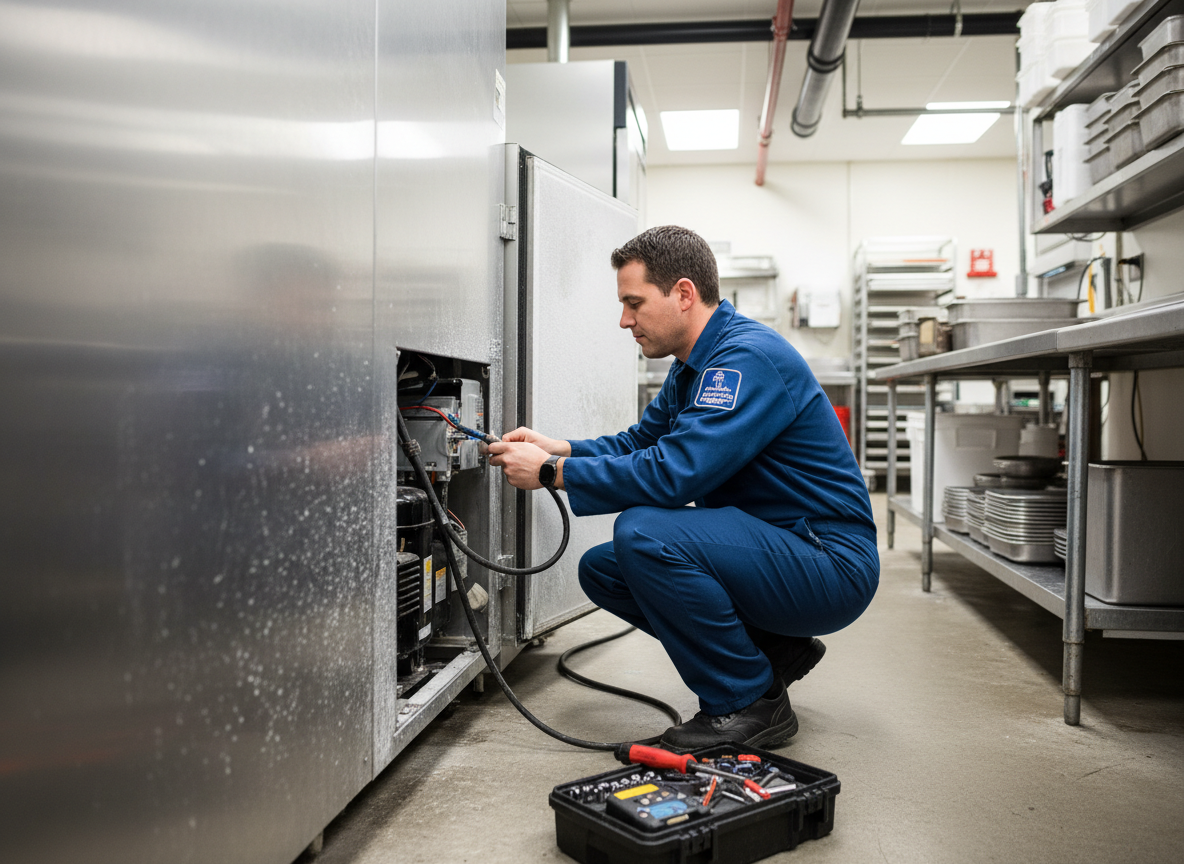
Diagnosis And Common Symptoms
Technicians start by checking temperature consistency, listening for unusual compressor or fan noises, and inspecting frost patterns inside the freezer. Common symptoms include food thawing then refreezing, constant running without cooling, visible ice buildup on coils, or clicking sounds that stop the unit from starting.
Components Often Tested
Testing typically covers the compressor, defrost timer or control board, evaporator and condenser fan motors, thermostat, door gaskets, and start relay. Each part is checked for continuity, proper voltage, and mechanical function before any repair is recommended.
Repair Versus Replace Factors
Age of the freezer, cost of major parts like the compressor, and how well the rest of the unit is holding up determine the decision. In older Spokane homes with freezers kept in garages, power fluctuations during winter storms can shorten component life and tilt the scale toward replacement when multiple systems fail at once.
What To Prepare Before Service
Clear a path to the freezer and move items that block access to the back or sides. Note any recent temperature changes, unusual sounds, or error codes on digital models so the technician can focus testing quickly.
Technician insight
In Spokane, the thing that catches most people out with Freezer Repair is placing units in unheated garages where winter temperatures swing widely and older homes often have outdated wiring that causes voltage drops during storms. These conditions wear out start relays and compressors faster than indoor placements, yet homeowners rarely check the electrical supply before calling for service.
Garage Freezer Losing Temperature
A homeowner noticed the freezer in an older Spokane garage was running constantly yet ice cream was soft. Testing showed the evaporator fan motor had seized and the defrost heater was open. The motor was replaced and the heater circuit restored; the unit returned to stable zero-degree operation without further issues.
Freezer Repair Services We Offer
✓Compressor Testing and Repair
Identifies whether the compressor is starting, running efficiently, or failing due to electrical or mechanical wear. Restores cooling performance without unnecessary full-unit replacement.
✓Defrost System Service
Addresses timers, heaters, and sensors that prevent ice buildup on evaporator coils. Restores proper airflow and temperature stability in frost-free models.
✓Evaporator Fan Motor Replacement
Replaces motors that no longer circulate cold air evenly through the freezer compartment. Eliminates warm spots and reduces strain on the compressor.
✓Thermostat and Control Calibration
Tests and adjusts the thermostat or electronic control board that regulates freezer temperature. Prevents over-cycling or insufficient cooling.
✓Door Gasket and Seal Repair
Replaces worn or torn gaskets that allow warm air to enter and cause frost or temperature swings. Improves efficiency and reduces run time.
✓Condenser Coil Cleaning and Inspection
Removes dust and debris from coils that restrict airflow and cause overheating. Lowers energy use and extends compressor life in Spokane's dusty summer conditions.
How it works
- 1
On-Site Symptom Review
The technician listens to the reported issues and observes the freezer in its normal location.
- 2
Component Testing
Each suspected part is checked with meters and visual inspection for faults.
- 3
Repair Or Recommendation
Parts are replaced when feasible or the homeowner receives clear guidance on replacement options.
- 4
Function Verification
The unit is run through a cycle to confirm temperatures stabilize and no new issues appear.
Pricing
Cost varies with the parts required and time spent on testing; homeowners receive an upfront explanation before any work begins.