
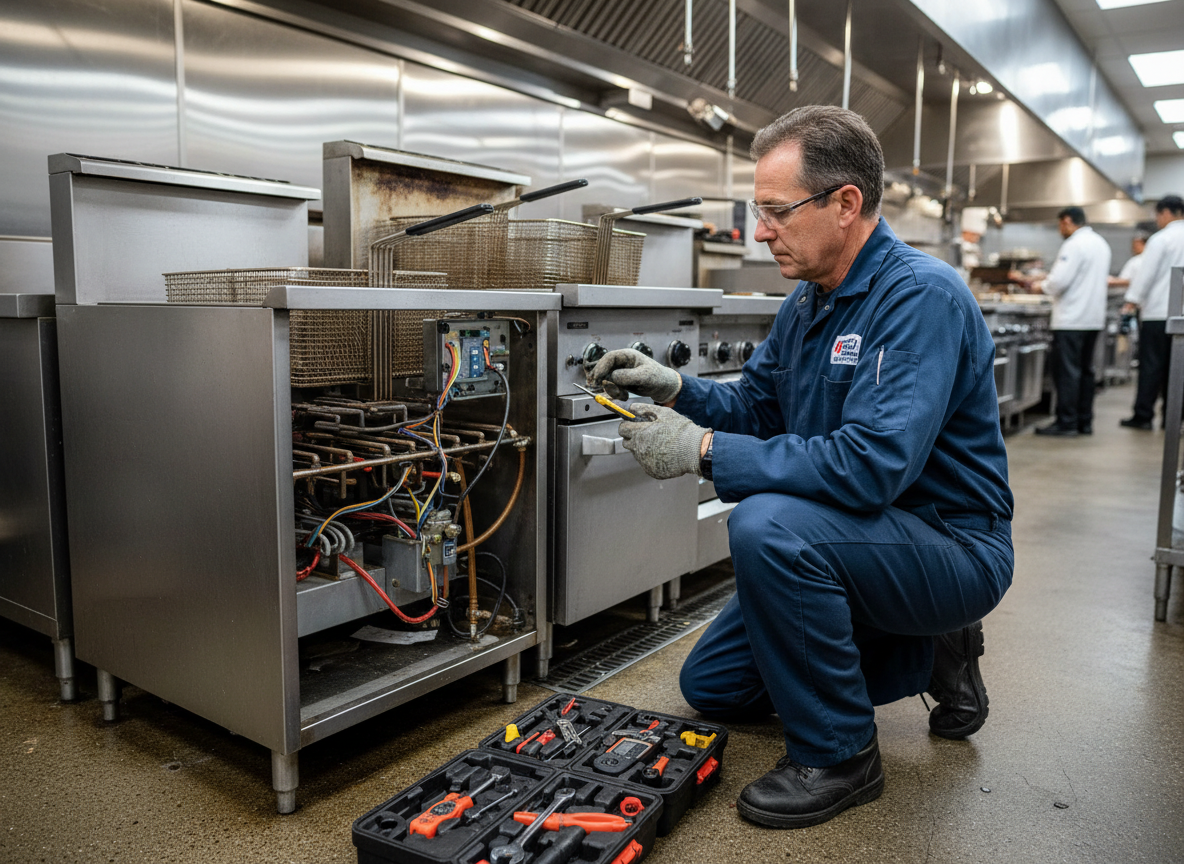
Diagnosis And Testing
Technicians begin by checking power supply and control settings, then test heating elements for continuity and resistance. Temperature probes and thermostats are measured against actual oil readings to identify calibration drift or sensor failure.
Common Failure Symptoms
Fryers may fail to reach set temperatures, trip breakers during preheat, or show error codes on digital displays. Uneven cooking, oil smoking at low settings, or baskets that stick in the raised position often point to worn components rather than total unit failure.
Components That May Require Testing
Gas models need valve operation and ignition checks while electric units focus on relay boards and high-limit switches. Oil filtration pumps, basket lift motors, and drain valves are examined for leaks or binding that affect daily operation.
Repair Versus Replace Considerations
Units under ten years old with isolated element or probe issues are typically repaired when parts remain available. Heavily corroded cabinets or discontinued control boards often make replacement the practical choice for high-volume kitchens.
Preparing For Service
Clear at least two feet of workspace around the fryer and have the model number and any recent service history ready. Note whether the unit is gas or electric and list the specific symptoms observed during the last shift.
Technician insight
In Spokane, the thing that catches most people out with commercial fryer repair is older restaurant buildings with 60-amp service panels that cannot handle modern high-wattage elements without tripping during preheat. Many owners assume the fryer itself is the problem when the real issue is undersized wiring from the 1980s or 1990s that was never upgraded when the kitchen equipment changed.
Digital Control Failure On A Gas Fryer
A Spokane kitchen reported the fryer would not hold temperature and displayed random error codes. Testing showed the main control board had failed while the gas valve and ignition system remained functional. The board was replaced with an available aftermarket unit and the fryer was recalibrated to match the original temperature settings. Service restored full operation without requiring a new fryer.
Commercial Fryer Repair Services We Offer
✓Heating Element Testing and Replacement
Technicians measure resistance across each element and replace failed units to restore even heat distribution without replacing the entire fryer.
✓Thermostat and Temperature Probe Service
Calibration checks and sensor swaps correct temperature inaccuracies that cause undercooked food or excessive oil breakdown.
✓Gas Valve and Ignition Repairs
Inspection of pilot assemblies and solenoid valves resolves inconsistent lighting and flame failure on gas fryers common in Spokane restaurants.
✓Control Panel and Relay Diagnostics
Board-level testing identifies faulty relays or touchpad issues that prevent proper cycle selection and safety interlocks from engaging.
✓Basket Lift and Safety Switch Repair
Mechanical adjustment and switch replacement restore automatic lift function and prevent units from operating with baskets in unsafe positions.
✓Oil Filtration Pump Maintenance
Pump motor checks and seal replacements keep filtration systems running so kitchens avoid premature oil disposal and clogged lines.
How it works
- 1
On-Site Assessment
The technician inspects the fryer model, records error codes, and performs initial voltage and continuity tests.
- 2
Component Isolation
Failed parts are isolated through targeted testing of elements, probes, valves, and controls while the rest of the unit remains intact.
- 3
Parts Verification
Available replacement components are confirmed against the specific fryer make and model before any work proceeds.
- 4
Repair Execution
Approved parts are installed and the fryer is cycled through heat-up and safety tests to confirm operation.
- 5
Final Walkthrough
The technician demonstrates correct settings and notes any ongoing maintenance the kitchen staff should perform.
Pricing
Cost depends on whether the fryer is gas or electric, the age of the unit, and whether common parts like elements or probes are needed versus specialized control boards.