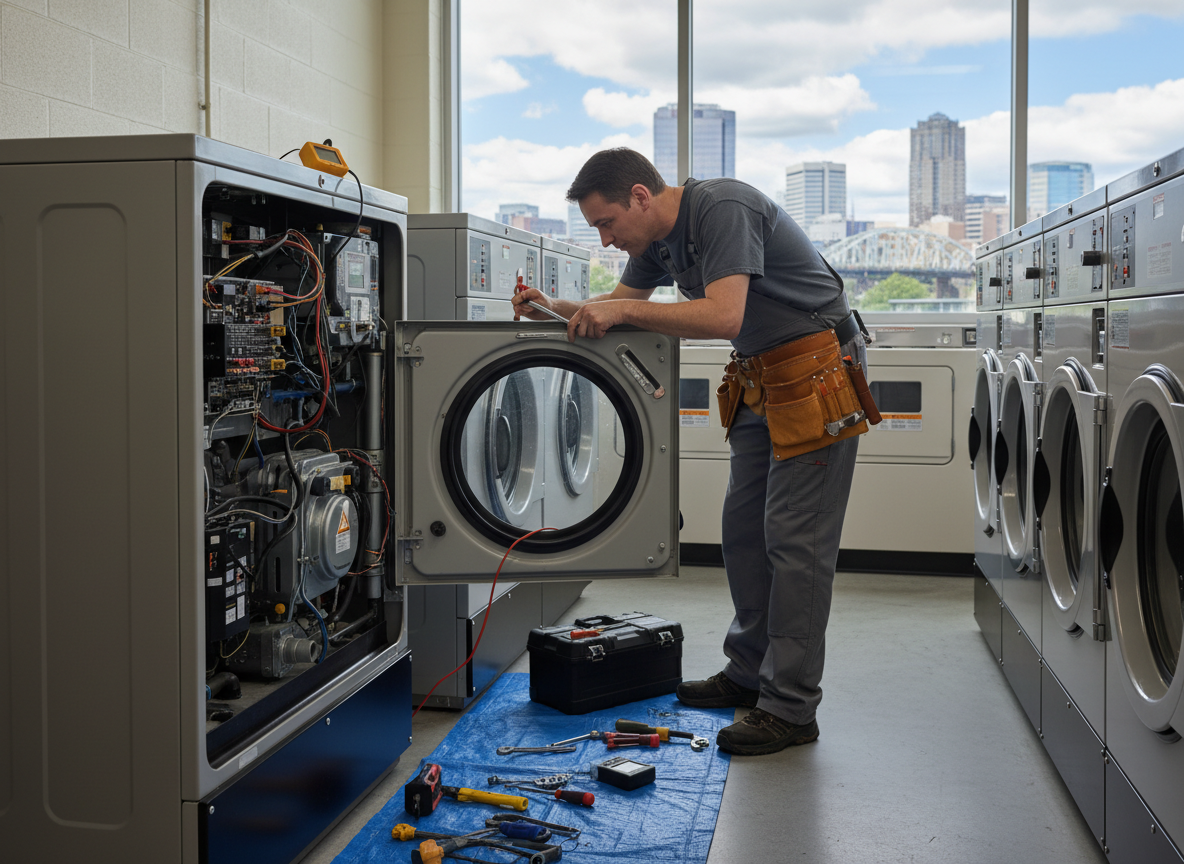
Commercial washer repair begins with a full diagnostic to identify why the unit stopped performing. Common failure symptoms include failure to drain, inconsistent spin speeds, error codes on the display, leaking from the door or base, and cycles that start but never complete. Technicians test components such as the drain pump, motor, drive belt, water inlet valves, control board, and door latch assembly. Repair versus replace decisions depend on the machine's age, parts availability, and how heavily the unit runs each week; many Spokane operators choose targeted repairs when the frame and tub remain sound.
Before the technician arrives, customers should clear space around the washer, note any error codes or recent changes in performance, and have the model number ready. This preparation speeds up testing and helps avoid delays during the visit.
Common Symptoms and Component Testing
Technicians check for unusual noises during spin, water not entering at the correct temperature, and doors that fail to lock. They use multimeters on motors and valves, inspect wiring harnesses for wear, and run test cycles to confirm the issue.
Repair Versus Replace Considerations
When the control board fails on a ten-year-old unit that runs twelve hours a day, replacement often makes more sense than repair. For newer machines with a single failed pump or seal, fixing the part usually restores reliable service without the cost of a full replacement.
What to Prepare Before Service
Move laundry carts and supplies away from the machine, shut off the water supply if accessible, and keep the breaker panel clear so power can be isolated safely during testing.
Technician insight
In Spokane, the thing that catches most people out with Commercial Washer Repair is hard water mineral buildup that quickly damages inlet valves and pumps, especially in buildings downtown where the plumbing dates back decades and sees constant daily use.
Laundromat Washer Stuck in Drain Cycle
A commercial front-load washer at a Spokane laundromat would not advance past the drain phase. Testing showed the pump impeller was jammed with mineral scale from local water and the control board was receiving no signal. The pump was replaced and the board connection cleaned; the machine completed full cycles without error.
Commercial Washer Repair Services We Offer
✓Drain Pump Repairs
Replaces clogged or failed pumps so commercial units resume full drainage without standing water at the end of cycles.
✓Motor and Belt Service
Tests drive motors and replaces worn belts to restore consistent agitation and high-speed spin in high-volume washers.
✓Water Inlet Valve Testing
Checks and services inlet valves so machines fill at the correct rate and temperature during every load.
✓Control Board Diagnostics
Reads error codes and tests circuit boards to correct cycle selection and timing problems on electronic commercial models.
✓Door Seal and Latch Repairs
Inspects and replaces worn seals and latches to stop leaks and ensure the door stays locked during operation.
✓Coin Mechanism Maintenance
Services timers and coin acceptors on vending-style washers so revenue collection and cycle starts remain accurate.
How it works
- 1
On-Site Assessment
The technician inspects the washer, reviews any error codes, and asks about recent performance changes.
- 2
Component Testing
Each major part is tested with diagnostic tools to confirm which components are faulty.
- 3
Repair or Recommendation
The tech explains findings, outlines repair options, and notes when replacement may be more practical.
- 4
Verification and Cleanup
After the work, the machine runs through test cycles to confirm proper operation before the technician leaves.
Pricing
Cost depends on the model, which parts need replacement, and how long the diagnostic takes; an estimate is provided after testing.