
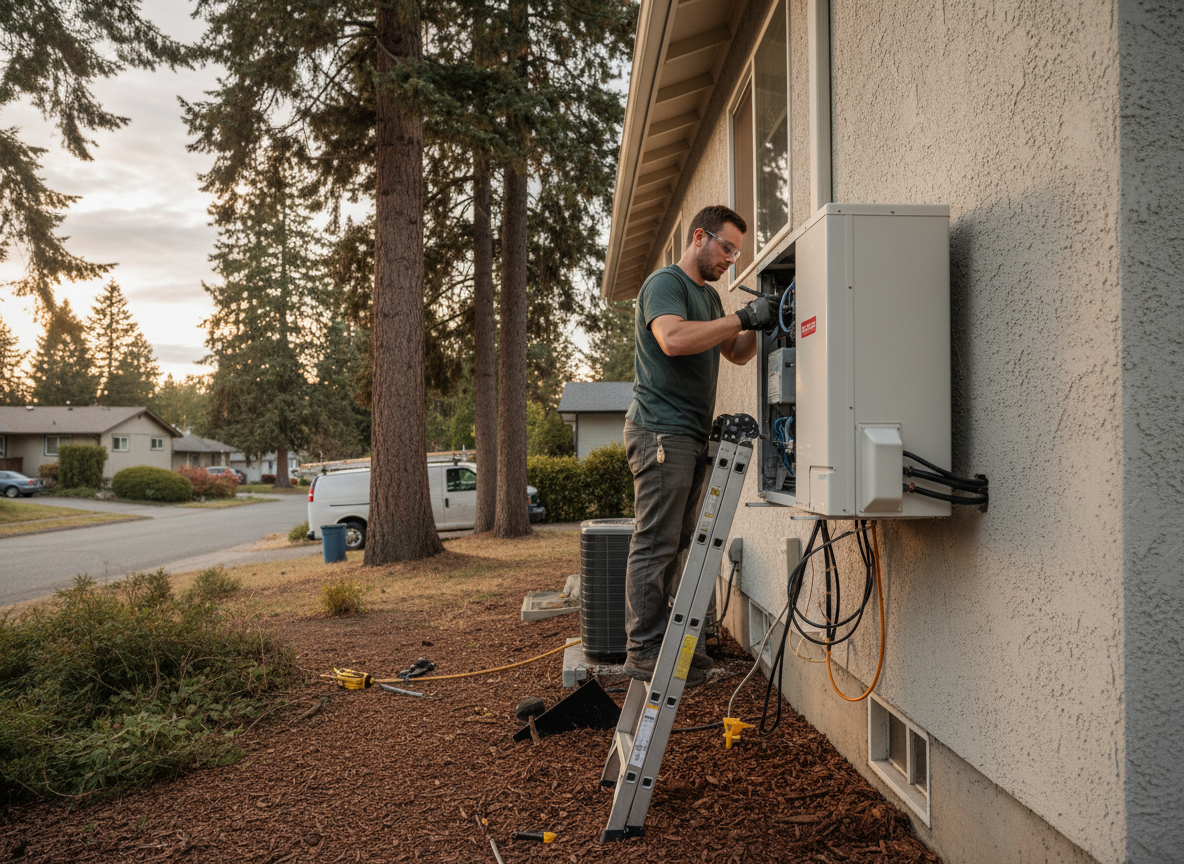
Ductless mini split repair begins with a full system check that covers both the indoor and outdoor units. Technicians test for error codes, measure temperatures at supply and return points, and inspect electrical connections for signs of wear common in Spokane homes built before 1990. Common failure symptoms include uneven room temperatures, unusual clicking or buzzing from the outdoor unit, and complete loss of heating once winter temperatures drop below freezing. Components often requiring testing are the compressor, fan motors, expansion valve, main control board, and sensors that read room temperature.
Repair versus replace decisions rest on the age of the system and the cost of parts versus a full new install. Older units with multiple prior repairs or hard-to-source compressors are usually better replaced, while newer systems with a single failed sensor or clogged coil can be restored economically. Homeowners should prepare by clearing access to both indoor and outdoor units, noting any recent error codes on the remote, and having the model numbers ready so the technician can check parts availability before starting work.
Common Failure Symptoms
Homeowners in Spokane most often report systems that run but fail to heat adequately during cold snaps, units that shut down after 20-30 minutes, and persistent water dripping from the indoor head caused by frozen coils.
Components That May Require Testing
Testing typically covers the inverter board for voltage output, the outdoor fan motor for proper RPM, refrigerant pressures at the service ports, and all wiring harness connections for corrosion from road salt used on Spokane streets.
Technician insight
In Spokane, the thing that catches most people out with Ductless Mini Split Repair is how fast the outdoor coils ice up once temperatures stay below 25 degrees for more than a day or two. Older homes with single-pane windows and poor insulation make the units run longer cycles, which hides a failing compressor until it is completely locked. Checking the defrost sensor and board settings early prevents repeat no-heat calls in January.
South Hill No-Heat Call
The system ran but delivered no warm air once overnight lows hit 18 degrees. Testing showed the outdoor defrost sensor had failed and the board was not initiating a defrost cycle, causing the coil to ice solid. The sensor was replaced and the board reset; the unit resumed normal heating without further issues.
Ductless Mini Split Repair Services We Offer
✓Compressor Testing
Measures start-up amperage and checks for hard-start issues that prevent the system from heating or cooling properly.
✓Refrigerant Leak Detection
Uses electronic detectors and nitrogen pressure tests to locate leaks in line sets common after years of vibration in older Spokane homes.
✓Fan Motor Replacement
Replaces failed indoor or outdoor motors that cause weak airflow and uneven temperatures across rooms.
✓Control Board Diagnostics
Reads error codes and tests voltage at the main board to restore communication between indoor and outdoor units.
✓Coil Cleaning
Removes dirt and pet hair buildup from evaporator and condenser coils to restore efficiency and prevent freeze-ups.
✓Thermostat and Sensor Calibration
Verifies and adjusts room and pipe sensors so the system maintains accurate set temperatures without short cycling.
How it works
- 1
System Access And Safety Check
Technician confirms power is isolated and gains clear access to both units before beginning any testing.
- 2
Error Code And Performance Scan
Remote and board codes are read while supply and return temperatures are measured to narrow down the fault.
- 3
Component Isolation Testing
Each major part is tested individually with meters and gauges to confirm the exact failure point.
- 4
Repair Or Replace Recommendation
Findings are explained on site with options for repair or full unit replacement based on condition and cost.
Pricing
Cost depends on which components need testing or replacement and whether refrigerant recovery or line-set work is required.