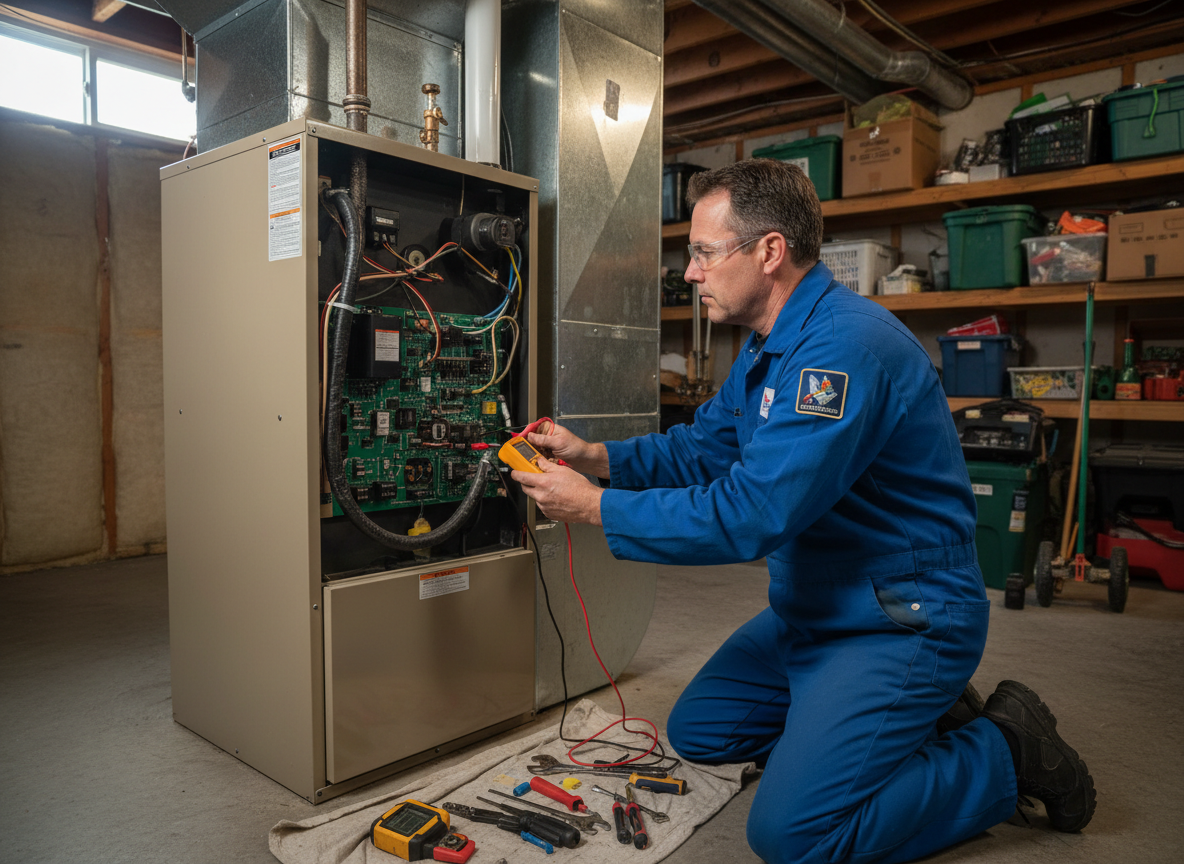
Furnace repair starts with a full system check to identify why heat is not reaching the home. Technicians test electrical connections, gas supply, and airflow before any parts are replaced.
Common Failure Symptoms
Homeowners often notice short cycling, unusual noises from the blower, or rooms that stay cold even when the thermostat is set high. Weak airflow or a furnace that runs constantly without warming the house are frequent signs something inside needs attention.
Components That May Require Testing
Key parts checked include the igniter, flame sensor, blower motor, limit switches, and control board. Each is tested with a multimeter or visual inspection to confirm it is the source of the problem.
Repair vs Replace Considerations
When a furnace is more than fifteen years old and multiple major components show wear, replacement often makes more sense than repeated repairs. Newer units may also offer better efficiency in Spokane's long heating season.
What to Prepare Before Service
Clear a three-foot path to the furnace, note any error codes on the display, and have the model number ready. Homeowners should also mention recent filter changes or any odd smells noticed during operation.
Technician insight
In Spokane, the thing that catches most people out with furnace repair is older homes with furnaces installed in tight crawl spaces or uninsulated basements where cold air leaks make the unit work harder all winter. Homeowners often skip filter changes because they forget the unit is running nonstop from October through March.
No Heat on a December Evening
The furnace would attempt to start then shut down within seconds. Testing showed the flame sensor was coated with residue from an older burner assembly. The sensor was cleaned and reinstalled, restoring steady operation for the rest of the heating season.
Furnace Repair Services We Offer
✓Igniter Replacement
Restores reliable ignition so the furnace starts without repeated clicking or failed attempts on cold mornings.
✓Blower Motor Repair
Addresses weak airflow and loud operation by repairing or replacing the motor that moves heated air through the ducts.
✓Flame Sensor Cleaning
Removes buildup that causes the furnace to shut down shortly after starting, improving consistent burner performance.
✓Control Board Diagnostics
Identifies faulty relays or wiring on the main board that lead to erratic cycling or complete loss of heat.
✓Limit Switch Testing
Checks safety switches that prevent overheating, ensuring the furnace shuts off properly when temperatures rise too high.
✓Capacitor Replacement
Fixes hard-start issues and humming sounds by swapping the run capacitor that helps the blower motor turn on smoothly.
How it works
- 1
Initial System Check
The technician reviews the thermostat settings and listens to the furnace while it attempts to start.
- 2
Component Testing
Each major part is tested with meters and visual inspection to locate the exact failure point.
- 3
Repair or Part Swap
Faulty components are repaired or replaced using parts matched to the existing model.
- 4
Final Operation Test
The furnace is run through a full cycle to confirm heat output and safety switches function correctly.
Pricing
Cost depends on the parts required, the age and condition of the furnace, and how accessible the unit is in the home.