
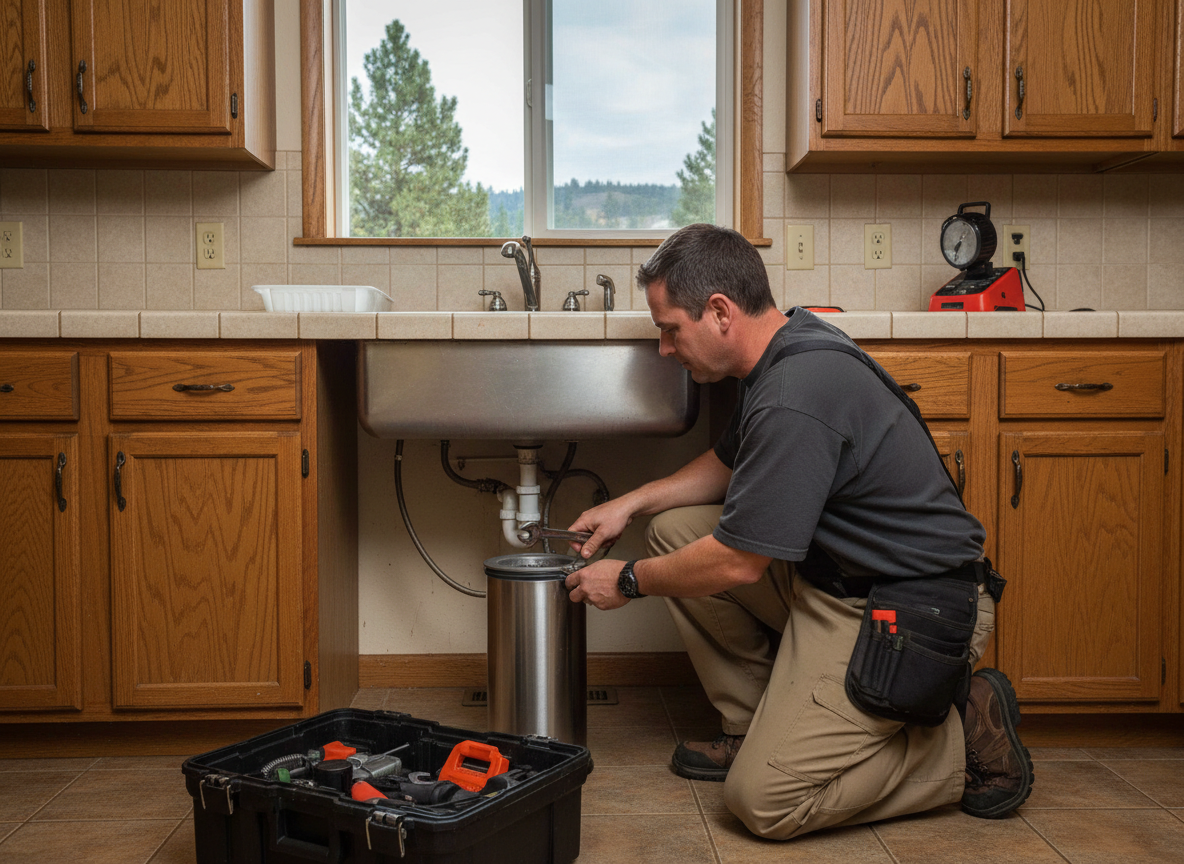
Garbage disposal problems in Spokane often start with a sudden jam or complete loss of power. Diagnosis begins with checking the reset button, testing voltage at the unit, and listening for motor hum to separate electrical issues from mechanical ones. Common failure symptoms include slow draining, unusual grinding noises, or water leaking from the sink flange. Technicians test the impeller, grind ring, and motor windings before deciding whether a part swap or full unit replacement makes sense.
Repair-versus-replace considerations depend on the unit's age and the extent of corrosion in the drain line. In many Spokane homes built before 1980, the original disposal shares an older galvanized pipe run that may need attention at the same time. Customers should clear the area under the sink, note any recent items that went down the drain, and have the circuit breaker location ready.
What Homeowners Should Prepare
Turn off power at the breaker and place a bucket under the unit. Have the model number visible if possible and note whether the disposal shares a circuit with the dishwasher.
Technician insight
In Spokane, the thing that catches most people out with Garbage Disposal is the age of the galvanized drain lines in homes built before the 1970s, especially in the South Hill and Logan neighborhoods. Those pipes often have interior scale that turns a simple jam into a bigger job once the unit is opened.
Seized Motor After Hard Object
A North Spokane homeowner reported the disposal humming but not spinning after a spoon went down. Testing showed the motor windings were open. The motor was replaced and the drain line was flushed. The unit now grinds normally and the homeowner was shown how to avoid future jams.
Garbage Disposal Services We Offer
✓Jammed Impeller Clearing
Removes lodged objects from the grinding chamber to restore rotation without replacing the entire unit.
✓Motor Testing and Replacement
Checks windings and capacitor function then installs a new motor when the original has seized or burned out.
✓Sink Flange and Seal Replacement
Stops leaks at the sink connection by installing a new flange and fresh plumber's putty or gasket.
✓Electrical Connection Repair
Fixes loose wiring, faulty reset switches, and damaged power cords that prevent the disposal from receiving power.
✓Drain Line Clearing
Removes clogs past the disposal that cause slow draining and can be mistaken for a failed unit.
✓Full Unit Replacement Assessment
Evaluates whether an older disposal is worth repairing or if swapping the entire appliance is the more reliable option.
How it works
- 1
On-Site Symptom Review
Technician listens to the unit, checks the reset button, and asks about recent use and any unusual noises or smells.
- 2
Component Testing
Voltage is measured at the terminal, the impeller is manually turned, and the motor is tested for continuity.
- 3
Repair or Replace Decision
Findings are explained along with parts cost and labor so the homeowner can choose the next step.
- 4
Completion and Function Check
The unit is reassembled, power is restored, and water flow plus grinding performance are verified.
Pricing
Cost varies with the parts required and whether the job stays a repair or becomes a replacement; an exact figure is given after testing.