Diagnosis and Common Failure Symptoms
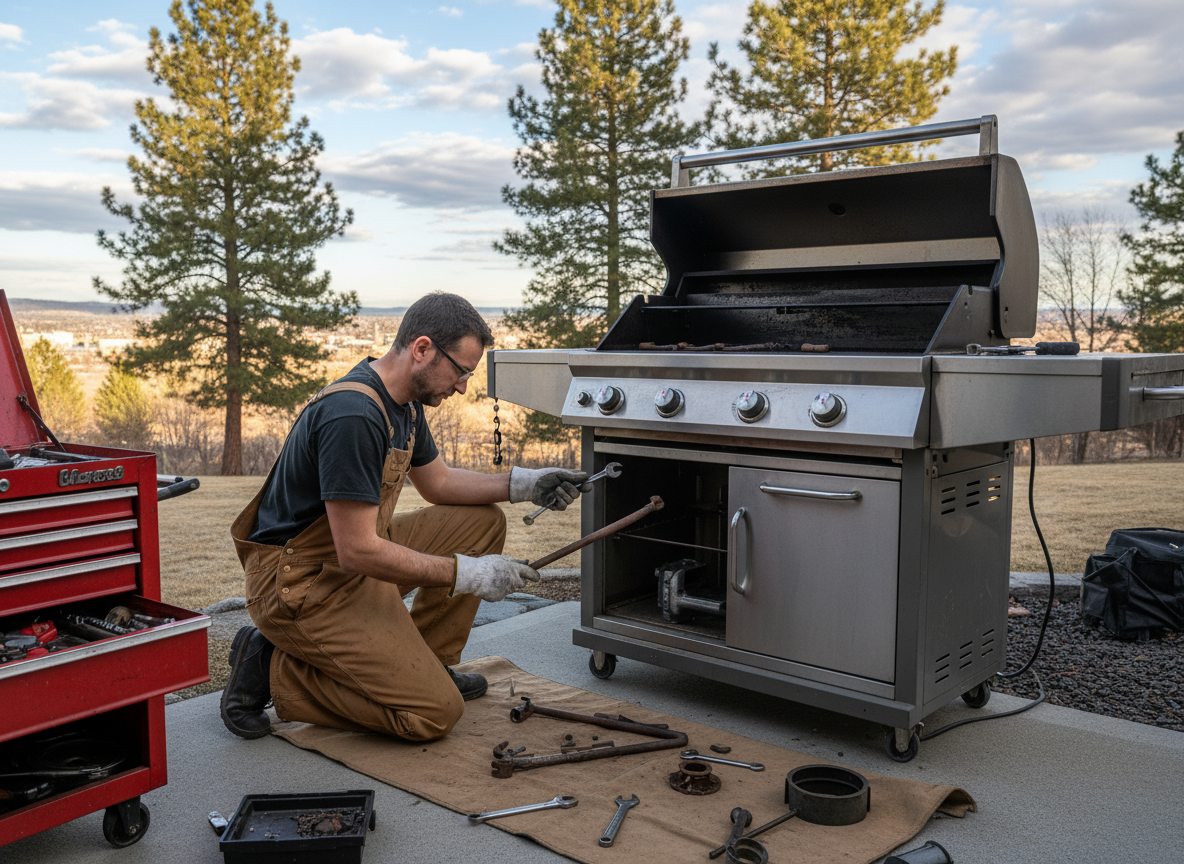
Technicians start by checking whether the unit fails to light, produces uneven heat, leaks gas, or shows error codes on electronic models. Spokane homeowners often notice problems after winter storage when condensation leads to corroded connections or seized valves.
Components That May Require Testing
Common parts tested include spark igniters, thermocouples, gas control valves, burner tubes, and temperature sensors. Each is checked for continuity, proper gas flow, and alignment before any parts are ordered.
Repair-vs-Replace Considerations
Repair makes sense when the grill body, frame, and main burners remain solid and replacement parts are still available. Full replacement is usually recommended once the firebox shows extensive rust or the cost of multiple components approaches that of a comparable new unit.
Preparing for Service
Clear access around the grill, have the model number ready, and note any recent fuel type changes or storage conditions. Disconnect propane tanks or shut off power ahead of the visit so testing can begin immediately.
Technician insight
In Spokane, the thing that catches most people out with Grill and Barbeque Repair is how our long, freezing winters damage units left on uncovered patios; moisture seeps into the ignition module and regulator during freeze-thaw cycles and creates hidden corrosion that only shows up once the weather warms.
Failed Igniter After Winter Storage
A Spokane homeowner reported their propane grill would not spark after sitting outside all winter. Inspection revealed corroded wiring inside the ignition module from repeated freeze-thaw cycles. The module was replaced and connections cleaned. The grill now lights consistently without manual intervention.
Grill and Barbeque Repair Services We Offer
✓Igniter System Repairs
Restores reliable spark or glow-bar ignition so the grill lights on the first attempt without repeated clicking or manual matches.
✓Burner and Flame Distribution Service
Cleans or replaces clogged burner tubes and adjusts flame height to eliminate hot spots and uneven cooking.
✓Gas Valve and Regulator Testing
Checks for leaks, proper pressure, and smooth operation so the unit maintains consistent temperature without sudden flame dropout.
✓Temperature Control Calibration
Tests and adjusts thermostats or electronic controls to correct inaccurate readings that cause over- or under-cooking.
✓Electric Grill Element Replacement
Swaps failed heating elements on plug-in models while verifying wiring and safety switches remain intact.
✓Propane Connection and Hose Inspection
Replaces cracked hoses and worn fittings to stop leaks and restore safe, steady fuel delivery from the tank.
How it works
- 1
Initial Assessment
Review symptoms and model details, then perform a safety check for gas leaks or electrical faults.
- 2
Component Testing
Measure voltage, continuity, and gas pressure on igniters, valves, and sensors to isolate the fault.
- 3
Repair or Recommendation
Present findings with clear options for repair versus replacement and any parts required.
- 4
Final Verification
Reassemble, run a full operational test, and confirm safe lighting and temperature control.
Pricing
Cost varies with the number of components needing replacement, parts availability for the specific model, and whether the unit is worth repairing versus replacing.