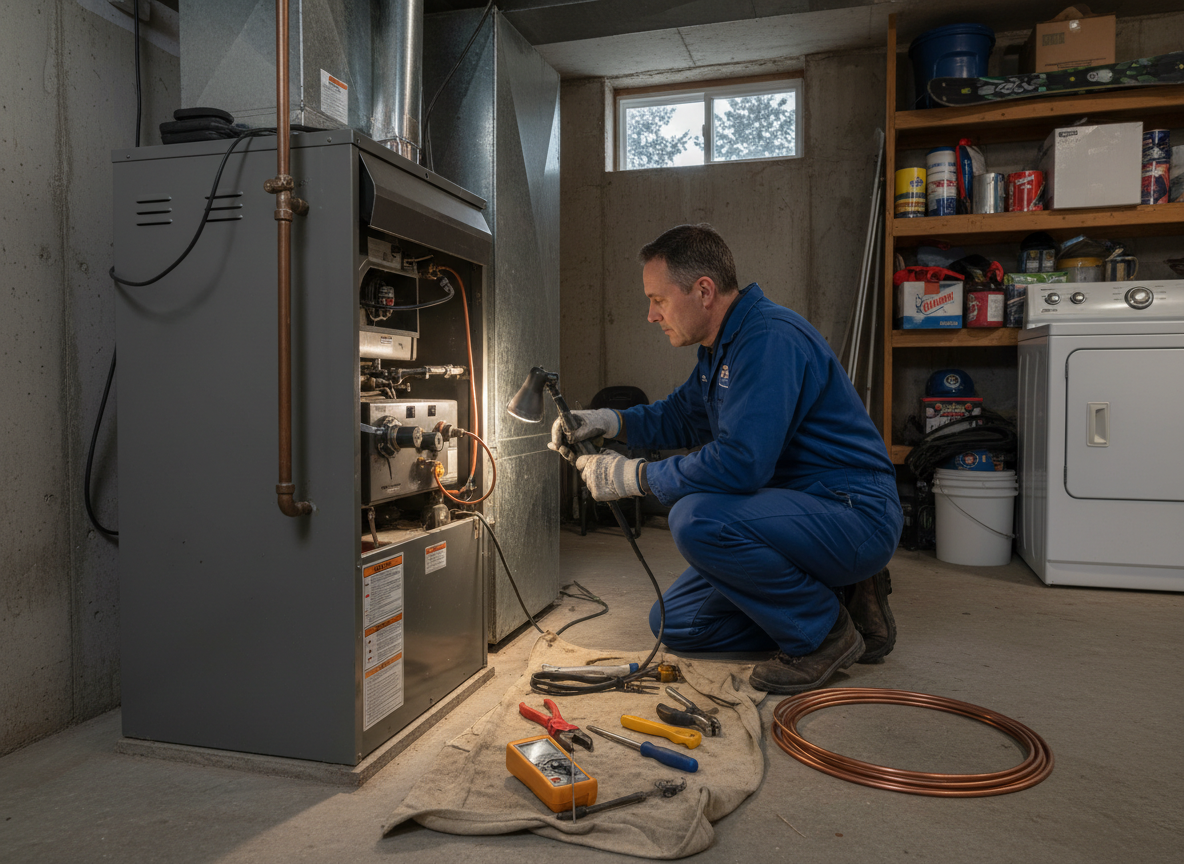
Heating repair starts with a full system diagnosis to identify why a unit stops producing consistent heat. Technicians check for error codes, listen for unusual sounds, and measure temperature output at vents. Common failure symptoms include short cycling, weak airflow, or a complete lack of ignition. Components often tested include the igniter, flame sensor, blower motor, limit switches, and gas valve.
Repair versus replace decisions depend on the age of the heating appliance and the cost of parts. In many Spokane homes an older furnace can be restored with targeted fixes, but cracked heat exchangers usually call for replacement. Customers should clear access to the unit, note any recent changes in performance, and have the model number ready before the technician arrives.
Common Failure Symptoms
Short cycling often points to a dirty flame sensor or failing limit switch. Weak airflow typically traces to a worn blower motor or clogged filter. No heat at all can result from a failed igniter or closed gas valve.
Components That May Require Testing
Technicians test the igniter for resistance, verify gas valve operation with a manometer, check blower motor amperage draw, and inspect the heat exchanger for cracks with a mirror and light.
Technician insight
In Spokane the thing that catches most people out with Heating Repair is how our long cold winters and older housing stock in neighborhoods like the South Hill combine to pack blower motors with fine dust from decades of wood heat, causing them to overheat right when homeowners need them most.
South Hill Furnace Short Cycling
A homeowner reported the furnace running briefly then shutting off during a cold snap. Testing showed heavy dust on the flame sensor and a weak blower motor. The sensor was cleaned and the motor capacitor replaced. Heat output stabilized and the unit ran through the rest of the winter without further issues.
Heating Repair Services We Offer
✓Furnace Igniter Replacement
Restores reliable ignition on gas furnaces that fail to light during cold Spokane mornings.
✓Thermostat Calibration
Corrects inaccurate temperature readings so heating systems maintain steady comfort without excessive run times.
✓Blower Motor Repair
Addresses weak airflow and unusual noises by testing and repairing or replacing the motor and capacitor.
✓Flame Sensor Cleaning
Removes oxidation that causes short cycling and restores proper flame detection on gas appliances.
✓Limit Switch Testing
Checks safety switches that shut down the furnace when overheating occurs, preventing further damage.
✓Gas Valve Adjustment
Fine-tunes gas pressure for efficient combustion and steady heat output in local homes.
How it works
- 1
Initial Assessment
Technician reviews symptoms and inspects the heating unit for visible issues.
- 2
Component Testing
Key parts such as igniter, sensor, and motor are tested with diagnostic tools.
- 3
Diagnosis Review
Findings are explained along with repair options versus replacement considerations.
- 4
Repair or Adjustment
Approved work is completed and the system is tested for proper operation.
- 5
Final Check
Customer receives a summary of work performed and any maintenance recommendations.
Pricing
Cost depends on the parts required, time for testing, and whether the appliance can be economically repaired.