
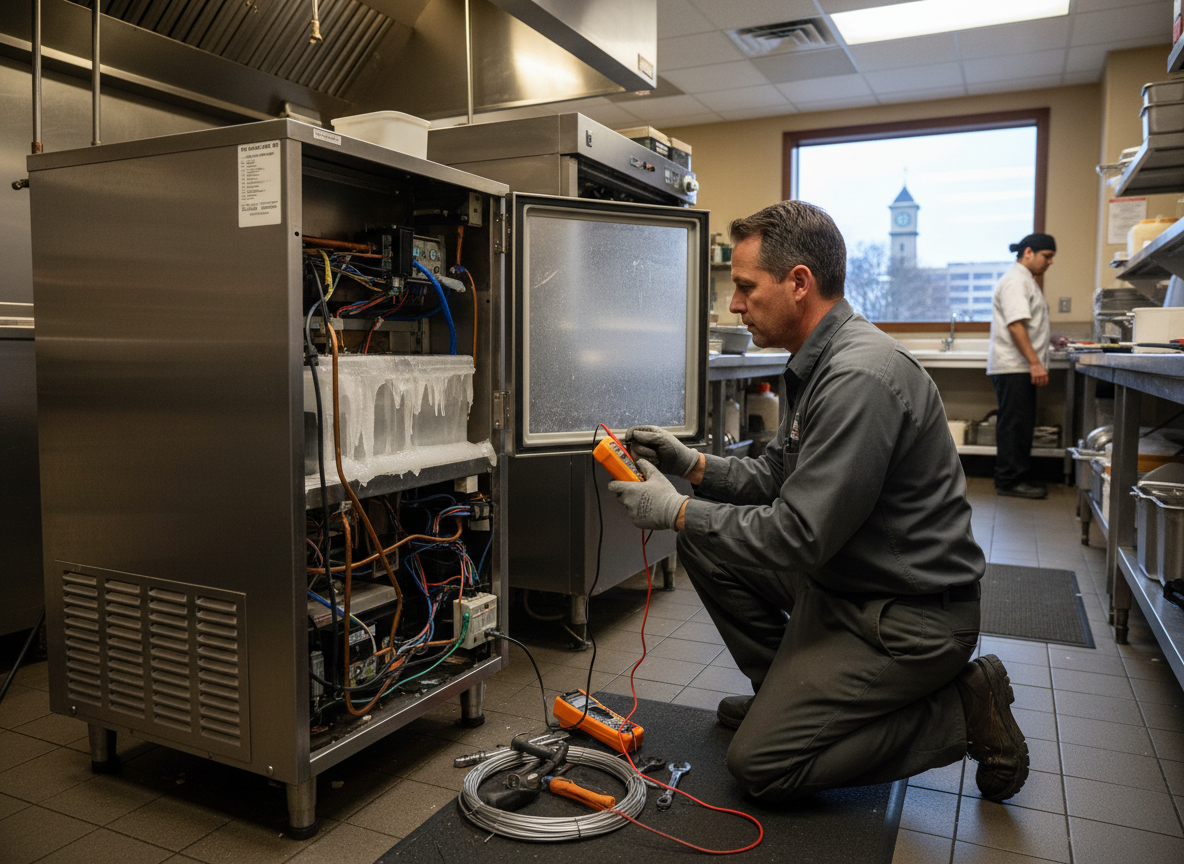
Ice maker problems in Spokane often show as slow or no ice production, odd noises during cycles, or cubes that are too small or hollow. Diagnosis starts with checking water supply flow, then moves to electrical signals at the control module and mechanical operation of the auger and ejector. Technicians test the water inlet valve for proper opening, the ice mold heater for continuity, the thermostat for accurate temperature response, and the fill cup for correct water level. When parts test faulty, repair is weighed against the age and overall condition of the refrigerator; units over ten years old with multiple failing components are usually better replaced.
Customers should clear space around the refrigerator, note any error codes on the display, and have the model number ready. Turning off the ice maker and emptying the bin ahead of the visit prevents mess during testing. Water shutoff valve location should be known in case lines need isolation.
Common Failure Symptoms
Slow production, leaking water into the bin, or ice that tastes off often trace to mineral scale or a sticking inlet valve. Grinding sounds point to a worn auger motor or jammed ice in the mold.
Repair-vs-Replace Considerations
If the refrigerator itself is still efficient and the ice maker is the only issue, targeted part replacement usually costs less than a new unit. When the compressor or sealed system is also aging, full replacement makes more sense.
What to Prepare Before Service
Have the water supply line accessible and the freezer at normal temperature. Note whether the problem started after a recent power outage or filter change.
Technician insight
In Spokane, the thing that catches most people out with Ice Maker Repair is mineral scale from our hard water, especially in homes built before the mid-80s where the original supply lines were never descaled. That buildup quietly ruins inlet valves and molds long before the homeowner notices reduced output.
South Hill Refrigerator Stops Making Ice
The homeowner noticed cubes shrinking over several weeks then production stopped entirely. Testing showed the inlet valve had failed due to scale and the mold heater had an open circuit. The valve and heater were replaced, the lines flushed, and the unit resumed normal production the same day.
Ice Maker Repair Services We Offer
✓Ice Maker Module Testing
Checks the electronic control board for proper cycle timing and signal output so the unit resumes reliable ice production.
✓Water Inlet Valve Service
Tests and replaces the valve that regulates water flow into the mold, stopping leaks and restoring correct fill levels.
✓Ice Mold Heater Repair
Verifies heater continuity and replaces failed elements that prevent cubes from releasing during the harvest cycle.
✓Auger Motor Replacement
Diagnoses and swaps the motor that drives ice through the dispenser, eliminating grinding noises and jammed bins.
✓Thermostat Calibration
Tests the bimetal thermostat that controls freeze and harvest temperatures and replaces it when readings drift.
✓Fill Cup and Sensor Adjustment
Aligns the water fill cup and optical sensors so ice levels stay consistent and overflow is prevented.
How it works
- 1
Initial Inspection
Technician reviews symptoms, checks water supply, and confirms power to the ice maker assembly.
- 2
Component Testing
Each part is tested with a multimeter for continuity, voltage, and mechanical function.
- 3
Diagnosis and Options
Findings are explained with repair versus replace guidance based on the refrigerator's overall condition.
- 4
Repair Completion
Faulty parts are replaced, the system is cycled, and ice production is verified before leaving.
Pricing
Cost depends on which components need replacement and current parts availability for the specific refrigerator model.