
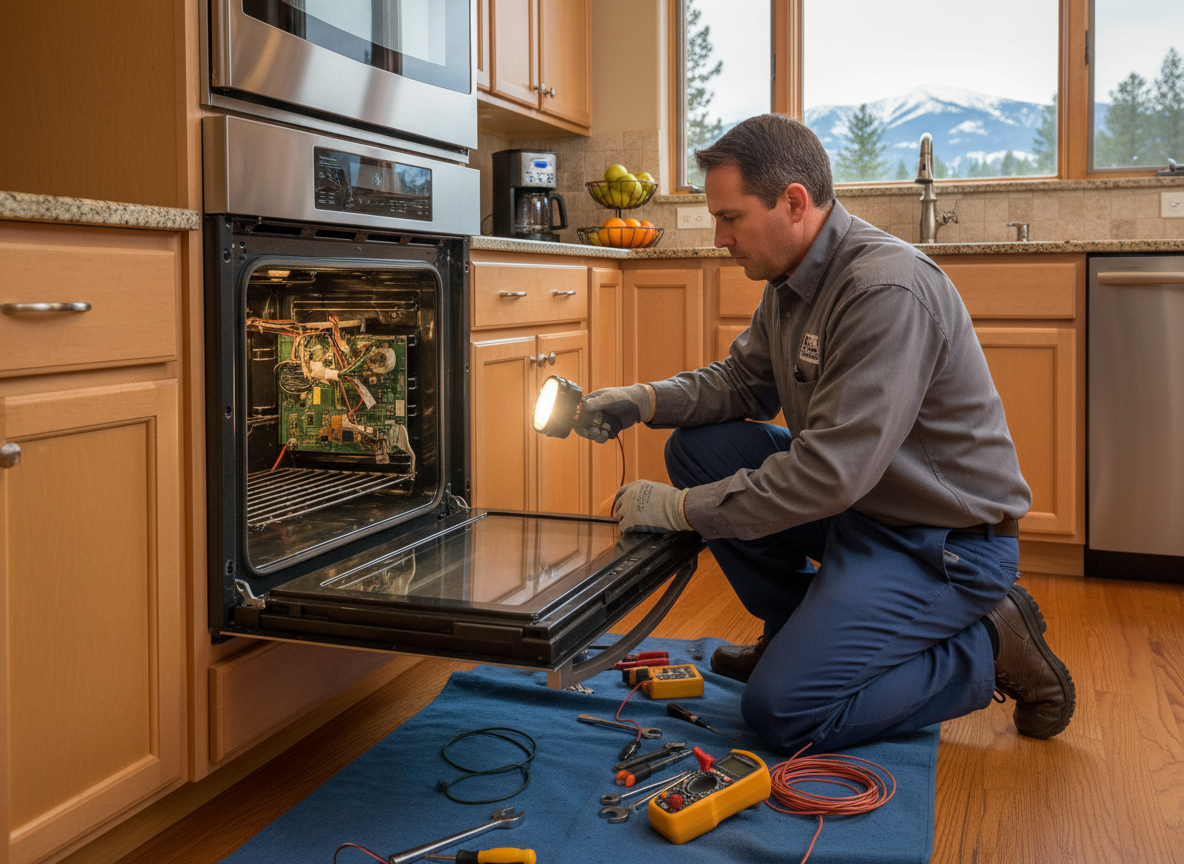
Oven repair begins with confirming the symptom, whether the unit fails to heat, heats unevenly, or shows error codes. Technicians check power supply first, then move to temperature accuracy and door seal integrity. Common failure symptoms include long preheat times, burned spots on one rack, or a door that no longer closes tightly. Components often tested include bake and broil elements, the temperature sensor, igniter on gas models, door hinges, and the electronic control board.
Repair versus replace decisions rest on the age of the oven and the cost of the failed part. In many Spokane homes built before 1980, a single element or sensor replacement restores function at a fraction of a new unit. When multiple boards or the door assembly need work, replacement may be the clearer path.
Before service, clear the area around the oven, note any error codes displayed, and have the model number ready. Unplug electric models or shut off the gas valve if safe to do so.
Common Components Tested During Oven Repair
Technicians isolate the bake element, broil element, temperature sensor, and control board using a multimeter. On gas ovens the igniter and gas valve are checked for proper amperage draw and continuity.
Repair Versus Replace Considerations
Single-part failures on ovens under twelve years old are usually repaired. When the control board and two heating elements fail together, or the unit is older than fifteen years, replacement often makes more sense for energy efficiency and reliability.
Technician insight
In Spokane, the thing that catches most people out with Oven Repair is how the dry climate and wide temperature swings in older Browne's Addition and South Hill homes accelerate sensor drift and element fatigue faster than in newer builds.
Uneven Baking on an Older Electric Range
Cookies were burning along the back while the front stayed underdone. Testing showed the rear bake element had an open circuit while the sensor read twenty-eight degrees low. The element was replaced and the sensor swapped. The oven now holds temperature within five degrees across all racks.
Oven Repair Services We Offer
✓Electric Oven Element Replacement
Returns consistent baking temperatures by swapping failed bake or broil elements that no longer draw proper current.
✓Oven Temperature Sensor Testing
Verifies and replaces the sensor when readings drift more than twenty-five degrees from the set temperature.
✓Gas Oven Igniter Replacement
Restores reliable lighting on gas models by installing a new igniter that meets the required amperage draw.
✓Oven Door Seal and Hinge Service
Stops heat loss and improves safety by replacing worn gaskets and adjusting or replacing loose hinges.
✓Control Board Diagnostics
Identifies failed relays or touchpad issues on electronic ovens and replaces the board when repair is not feasible.
✓Self-Cleaning Function Repair
Corrects lock mechanism or high-limit thermostat problems that prevent the self-clean cycle from starting or completing.
How it works
- 1
Symptom Confirmation
The technician runs the oven through its normal cycles while noting preheat time, temperature variance, and any codes.
- 2
Component Isolation
Each heating element, sensor, and control is tested with a multimeter to locate the exact failure point.
- 3
Part Replacement or Adjustment
Only the confirmed faulty part is replaced or recalibrated using manufacturer-specified components.
- 4
Post-Repair Verification
The oven is run through multiple cycles to confirm even heating and proper door operation before the technician leaves.
Pricing
Cost is driven by the number of components that must be tested and the price of the specific replacement part required.