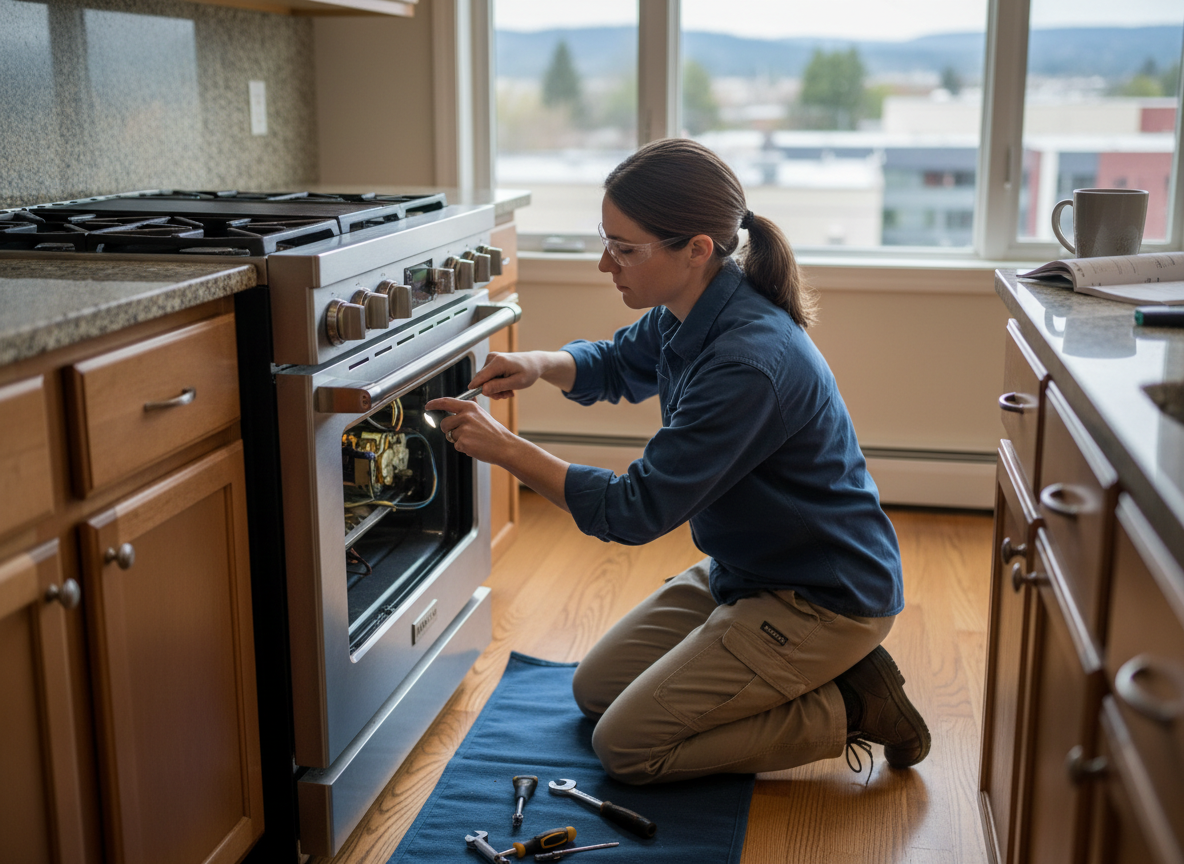
Range repair starts with a systematic diagnosis that checks power supply, heating performance, and control responses before any parts are replaced. Common failure symptoms include uneven cooking, failure to reach set temperature, burners that spark constantly or not at all, and error codes on digital displays. Technicians test elements, thermostats, igniters, gas valves, and control boards to isolate the fault.
Repair versus replace decisions hinge on the age of the range, cost of the needed parts, and overall condition of the appliance. In many cases a single component replacement restores full function, while multiple failures or heavy corrosion often point toward replacement. Customers should clear the area around the range, note any error codes, and have the model number ready before the technician arrives.
Common Components Tested During Range Repair
Electric coil elements, bake and broil elements, surface burner valves, oven igniters, temperature sensors, and main control boards receive direct testing with multimeters and visual inspection for damage or wear. Gas models add checks on the safety valve and spark module. These tests guide whether a repair will hold or if broader issues exist.
Preparing Your Home for Range Repair Service
Turn off the breaker for electric ranges or shut the gas valve for gas models if you smell gas. Remove any stored items from the oven and storage drawer so the technician can access the back and underside. Having the manual or model number available speeds up parts identification.
Technician insight
In Spokane, the thing that catches most people out with Range Repair is older homes with aluminum wiring that overheats under the load of electric ranges during long winter baking seasons, often turning a simple element job into a wiring correction.
Gas Range Burner Failure
The range lit on only two burners and the oven would not ignite. Testing showed a cracked igniter and a sticking safety valve. Both components were replaced and the gas supply line was checked for leaks. The range now lights reliably on every burner and the oven reaches temperature without delay.
Range Repair Services We Offer
✓Electric Coil Element Repairs
Restores even heating on electric ranges by replacing worn or burned-out coils that no longer maintain consistent temperature.
✓Gas Burner Valve Repairs
Corrects uneven flame or failure to ignite on gas ranges through inspection and replacement of faulty valves or orifices.
✓Oven Igniter Replacements
Addresses ovens that fail to heat by installing new igniters that properly light the gas and maintain safe operation.
✓Temperature Sensor Testing and Replacement
Diagnoses and fixes inaccurate oven temperatures caused by faulty sensors that send wrong readings to the control board.
✓Control Board Diagnostics
Identifies electronic failures that produce error codes or unresponsive touchpads and determines whether board repair or replacement is needed.
✓Door Seal and Hinge Repairs
Improves heat retention and safety by replacing worn seals or damaged hinges that allow heat to escape during baking.
How it works
- 1
Initial Symptom Review
Technician discusses the specific issues reported and reviews any error codes or recent changes in performance.
- 2
On-Site Testing
Voltage, resistance, and gas flow checks are performed on suspect components while the range remains in place.
- 3
Findings and Options
Results are explained along with repair versus replace considerations and any parts that may be required.
- 4
Repair Completion
Approved work is performed, the range is tested through multiple cycles, and the customer receives guidance on use.
Pricing
Cost varies with the parts required and time spent on diagnosis; an upfront quote is given once the issue is identified.