
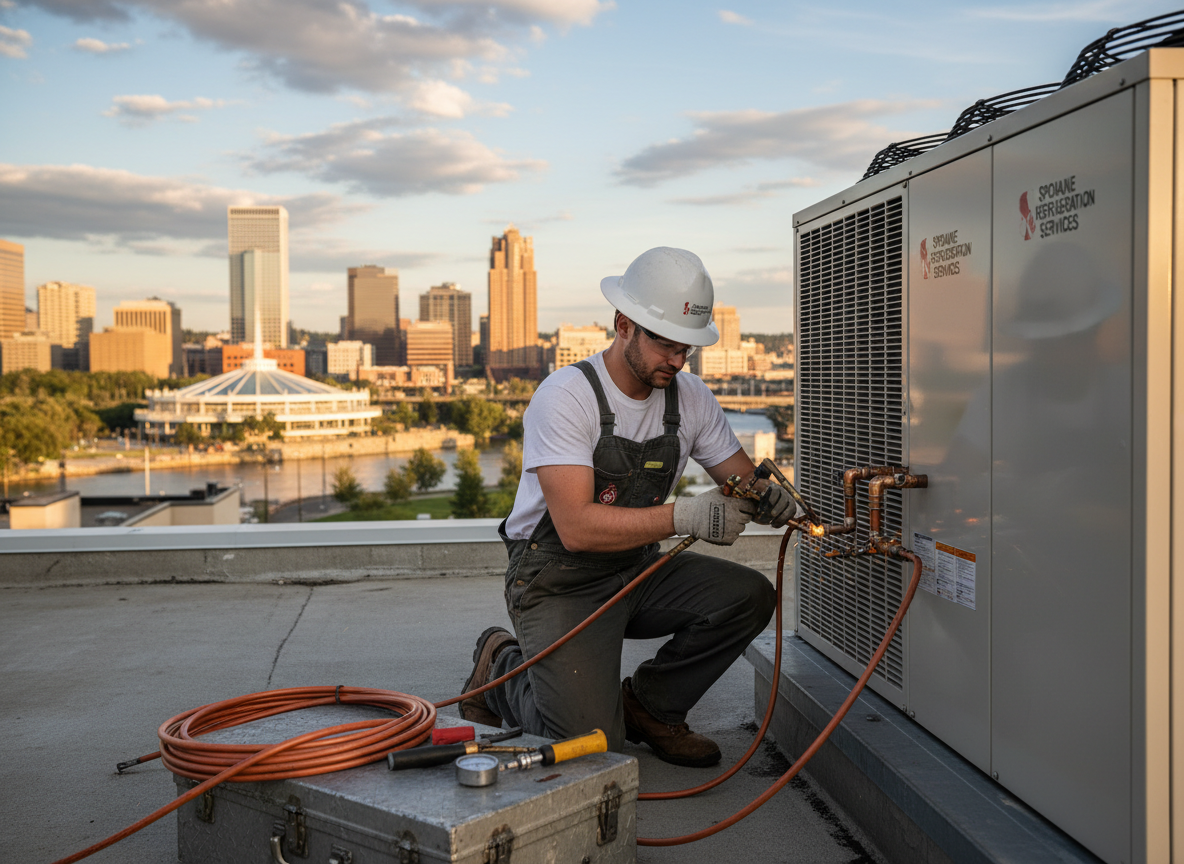
Refrigeration issues in Spokane often surface after years of steady use in older homes where voltage fluctuations and dry winter air stress seals and motors. Diagnosis starts with checking temperatures, listening for unusual noises, and testing electrical components before any parts are ordered. Repair versus replace decisions weigh the age of the unit against the cost of major parts like compressors, with many units salvaged through targeted fixes rather than full replacement.
Common Failure Symptoms
Customers notice warm sections in the freezer, frost buildup on walls, or the unit running constantly without cycling off. Clicking sounds from the compressor area or water pooling inside point to fan or defrost problems that need specific testing.
Components That May Require Testing
Technicians check the compressor for proper amperage draw, measure resistance on defrost heaters, verify fan motor operation, inspect door gaskets for gaps, and scan control boards for error codes. Refrigerant lines are examined for leaks using electronic detectors when cooling performance drops.
Repair vs Replace Considerations
Units under ten years old with isolated failures like a bad fan motor are usually repaired. Older models with multiple worn parts or high repair costs compared to a new unit lead to replacement recommendations based on the actual condition found during service.
What to Prepare Before Service
Clear space around the refrigerator for access, note any error codes or recent temperature readings, and have the model number ready. Removing food from the affected areas speeds up the initial inspection.
Technician insight
In Spokane, the thing that catches most people out with refrigeration is how older split-level homes from the 1970s and 80s often have low-voltage issues during winter peaks that mimic a failing compressor. Homeowners replace the whole unit when a simple control board or start relay would have fixed it.
Constant Running in Browne's Addition Home
A refrigerator in an older Spokane home stayed on nonstop and developed frost on the back wall. Testing showed the evaporator fan motor had seized while the defrost heater still worked. The motor was replaced and the unit returned to normal cycling within the same visit.
Refrigeration Services We Offer
✓Compressor Testing and Replacement
Restores cooling performance when the compressor fails to start or runs inefficiently by verifying electrical draw and replacing only when necessary.
✓Evaporator Fan Motor Repair
Eliminates warm spots and excessive frost by diagnosing and replacing motors that no longer circulate air properly across coils.
✓Defrost System Repair
Stops ice buildup and constant running by testing timers, heaters, and thermostats that control the automatic defrost cycle.
✓Door Seal Replacement
Reduces energy waste and temperature swings by installing new gaskets that create a tight seal against the cabinet frame.
✓Temperature Control Board Diagnostics
Resolves erratic cooling or error codes by inspecting and repairing the electronic board that manages sensors and compressor operation.
✓Condenser Coil Cleaning and Fan Service
Improves efficiency and prevents overheating by clearing dust from coils and ensuring the condenser fan moves air freely.
How it works
- 1
Initial Assessment
Technician arrives and reviews symptoms while checking basic operation and noting model details.
- 2
Component Testing
Each suspected part is tested with multimeters and specialized tools to confirm failure points.
- 3
Diagnosis Review
Findings are explained with clear repair options and cost factors before any work begins.
- 4
Targeted Repair
Approved parts are installed and the system is reassembled with attention to original wiring and seals.
- 5
Performance Verification
Unit is run through cycles to confirm stable temperatures and proper defrost function.
Pricing
Cost varies by the component involved, parts sourcing for the specific model, and whether multiple issues are found during testing.