
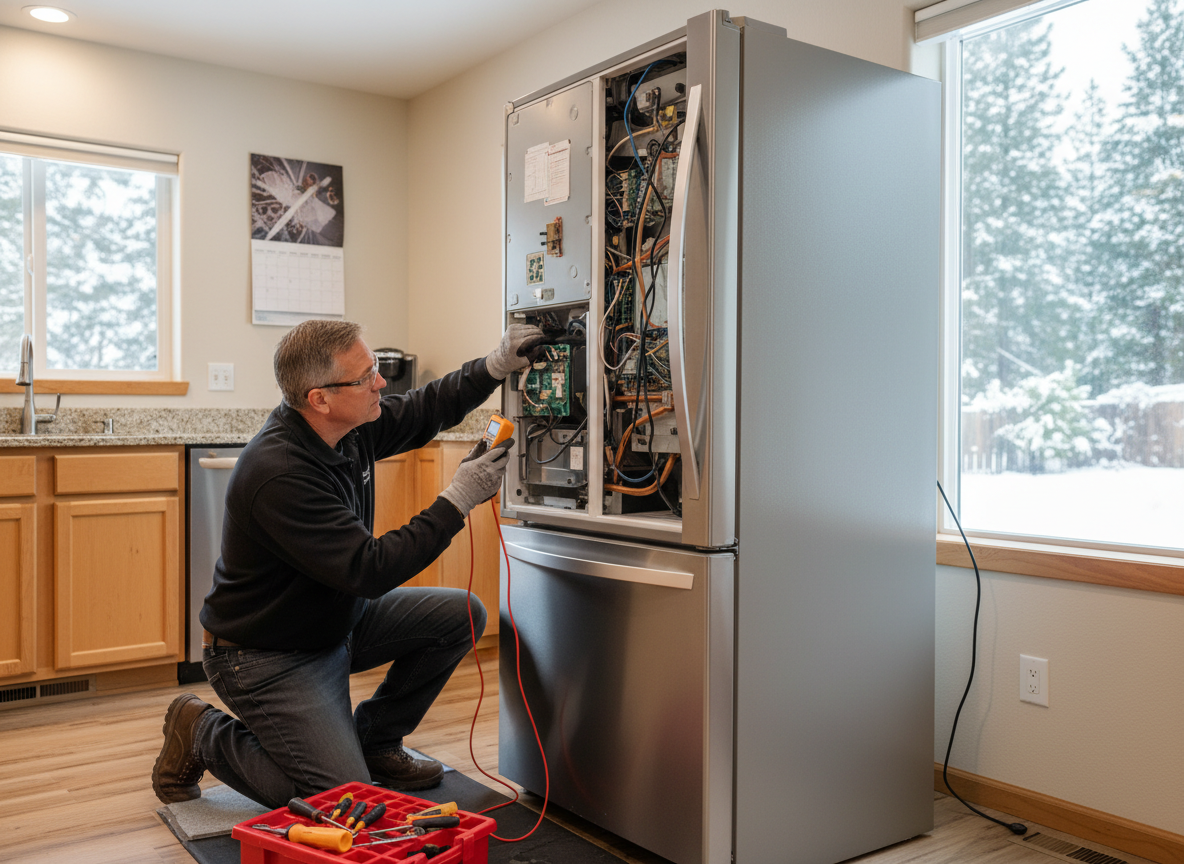
Refrigerator repair begins with systematic diagnosis of why the unit stopped maintaining proper temperatures. Technicians check power supply first, then move to mechanical and electrical components that commonly fail in local homes.
Common Failure Symptoms
Homeowners often notice inconsistent temperatures, frost buildup inside the freezer, unusual noises from the rear, or water pooling at the base. These signs point to problems with fans, seals, or the defrost system rather than total failure.
Components That May Require Testing
Testing typically covers the compressor for startup and amp draw, the defrost timer or adaptive control board, evaporator and condenser fan motors, and the thermostat or thermistor readings. Door gaskets are checked for proper seal using a dollar bill test.
Repair vs Replace Considerations
Repair is often practical when the compressor and sealed system remain intact and the unit is under ten years old. Replacement becomes the better option once multiple major components fail or energy costs from an inefficient older model exceed repair expense.
What a Customer Should Prepare Before Service
Clear a path to the refrigerator on all sides and unplug the unit if it is still running. Note the model number from the interior wall or door edge and list any recent temperature readings or error codes displayed on digital models.
Seasonal Guidance
Spokane winters can stress older wiring in homes built before 1980, causing intermittent power issues that mimic compressor failure. Checking the outlet voltage before scheduling helps avoid unnecessary service calls.
Technician insight
In Spokane, the thing that catches most people out with Refrigerator Repair is older homes with aluminum wiring from the 1960s and 1970s that creates voltage drops during cold snaps, which then overheats the compressor and shortens its life.
No Cooling in Browne's Addition Home
A refrigerator in a 1970s Spokane house stopped cooling after a week of sub-zero temperatures. Testing showed the evaporator fan motor had seized due to a prior voltage sag. The motor was replaced and the unit returned to normal operation without further issues.
Refrigerator Repair Services We Offer
✓Compressor Testing
Measures startup amps and running performance to determine if the compressor can be repaired or must be replaced.
✓Defrost System Repairs
Addresses heater elements, timers, and adaptive controls that prevent ice buildup and restore proper cooling cycles.
✓Door Seal Replacement
Installs new gaskets that restore airtight closure and reduce energy waste from temperature fluctuations.
✓Evaporator Fan Motor Service
Replaces or lubricates the fan that circulates cold air, eliminating warm spots and strange noises.
✓Thermostat Calibration
Adjusts or replaces the temperature control to maintain accurate settings across both compartments.
✓Condenser Coil Cleaning
Removes dust and pet hair from the coils to improve efficiency and extend compressor life in dusty Spokane homes.
How it works
- 1
Initial Assessment
The technician reviews symptoms and checks basic power and temperature settings.
- 2
Component Testing
Each suspect part is tested with multimeter readings and visual inspection.
- 3
Diagnosis Review
Findings are explained along with repair options and cost factors.
- 4
Repair Execution
Approved work is completed using appropriate parts and tools.
- 5
Final Verification
The unit is run through a cycle to confirm temperatures stabilize correctly.
Pricing
Cost varies with the parts required, the age and model of the refrigerator, and the time needed for testing and access in the home.