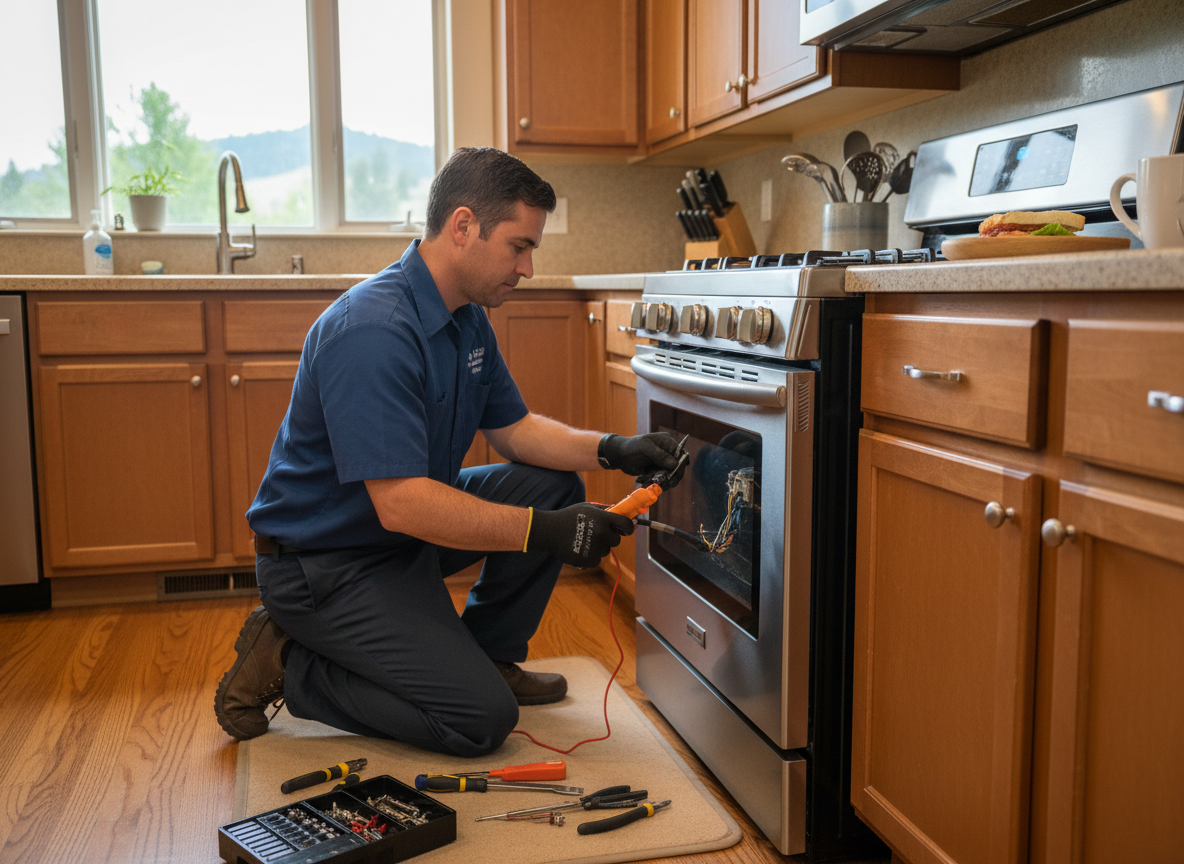
Stove problems often start with uneven heating, failure to ignite, or error codes on digital displays. A technician begins by verifying power or gas supply, then tests key components like igniters, thermostats, and control boards to pinpoint the fault.
Common symptoms include burners that spark but won't stay lit, ovens that won't reach set temperature, or elements that heat inconsistently. These point to wear on parts exposed to daily use in Spokane kitchens where winter cooking increases demand.
Components frequently tested include the oven sensor, gas safety valve, surface element switches, and wiring harnesses. Technicians check for continuity and proper voltage before deciding on repair or replacement.
Repair versus replace depends on the stove's age and repair cost relative to a new unit. Older models in Spokane's established neighborhoods often benefit from targeted part swaps when the frame and burners remain sound.
Before service, clear the area around the stove, note any error codes or recent changes in performance, and have the model number ready. This helps the technician bring appropriate parts on the first visit.
Technician insight
In Spokane, the thing that catches most people out with Stove Repair is older homes with aluminum wiring or undersized circuits from the 1960s and 70s. Those setups often overheat switches or cause intermittent element failures that look like the part itself is bad. Checking the actual voltage at the terminal block before swapping components saves a second trip.
Uneven Oven Heat on South Hill
A homeowner reported the oven taking twice as long to preheat and baking unevenly on the lower rack. Testing showed the temperature sensor had drifted far outside spec while the igniter and valve still functioned normally. The sensor was replaced and the oven recalibrated, restoring consistent temperatures across both racks.
Stove Repair Services We Offer
✓Igniter Replacement
Restores reliable lighting on gas stoves by swapping worn glow igniters that no longer draw sufficient current to open the gas valve.
✓Burner Switch Repair
Fixes surface elements that fail to adjust heat levels or stay on after the knob is turned, often restoring full control without replacing the entire range.
✓Oven Sensor Calibration
Corrects temperature inaccuracies by testing and replacing the sensor probe that communicates actual oven heat to the control board.
✓Gas Valve Service
Addresses valves that stick or fail to regulate flow, improving safety and consistent burner performance on natural gas or propane stoves.
✓Electric Element Testing
Checks coil and radiant elements for breaks or grounding faults that cause one or more burners to stop working entirely.
✓Control Board Diagnostics
Identifies failed relays or software glitches on electronic models that produce erratic behavior or prevent the oven from starting.
How it works
- 1
Initial Inspection
The technician examines the stove's exterior, connections, and any displayed codes while asking about recent symptoms.
- 2
Component Testing
Key parts are checked with multimeters and pressure gauges to confirm which items are operating outside normal ranges.
- 3
Repair or Replacement
Faulty components are replaced or adjusted on site when possible, using parts matched to the stove's make and model.
- 4
Final Verification
The stove is run through multiple cycles to confirm even heating and proper ignition before the job is complete.
Pricing
Cost varies with whether the stove is gas or electric, the specific part required, and availability from local suppliers.