
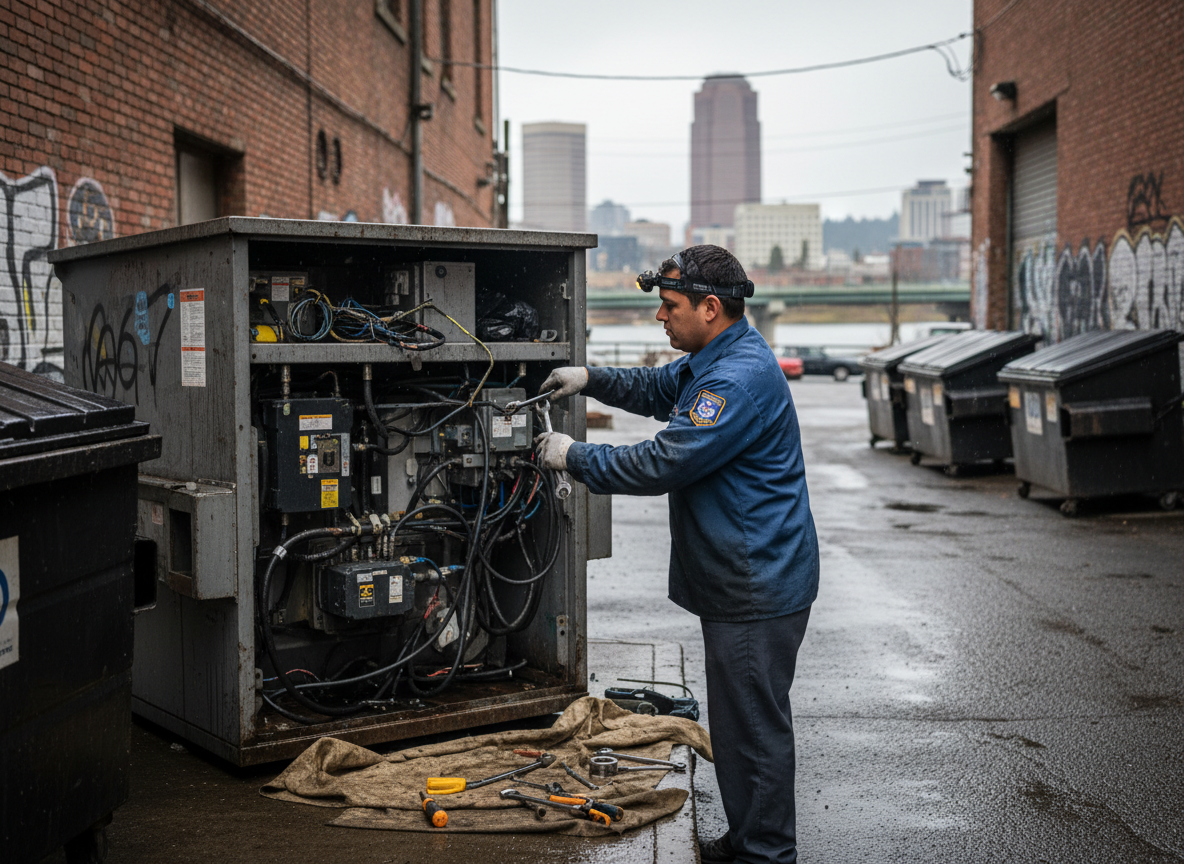
Trash compactor repair starts with checking power supply and safety switches before moving to mechanical components. Common failure symptoms include the unit failing to start, incomplete cycles, unusual grinding noises, or the ram not retracting fully. Technicians test the motor windings, capacitor, and limit switches to isolate the fault.
Repair versus replace decisions depend on the age of the unit and the cost of the failed parts. Older compactors in Spokane homes often have worn rams or seized bearings that make continued repairs uneconomical once multiple components show wear.
Before service, clear the area around the compactor, note any error lights or recent noises, and have the model number ready. This preparation helps the technician focus testing time on the actual problem rather than access issues.
Common Failure Symptoms
Homeowners most often report the compactor running but not compacting, the door not latching properly, or a burning smell during cycles. These point to motor strain, latch misalignment, or overloaded circuits.
Components That May Require Testing
Testing typically covers the start relay, directional control valve if hydraulic, drive gears, and safety interlock switches. Each is checked with a multimeter and manual actuation to confirm function before any replacement.
Repair vs Replace Considerations
When the ram assembly or main drive motor fails on a unit over ten years old, replacement often makes more sense than repair. Newer units with isolated motor issues can usually be restored with targeted part replacement.
Technician insight
In Spokane, the thing that catches most people out with trash compactor repair is the combination of older homes with 20-amp circuits and cold winters that thicken grease in the ram tracks. Homeowners often try to force another cycle instead of clearing the jam first, which burns out the motor or trips the breaker repeatedly.
Incomplete Cycle on South Hill Unit
The compactor would start but stop halfway through the cycle. Testing showed the ram limit switch had shifted due to vibration on the older cabinet. The switch was realigned and the ram tracks cleaned of thickened lubricant. The unit completed full cycles afterward.
Trash Compactor Repair Services We Offer
✓Motor Testing and Replacement
Full load testing of the drive motor identifies winding or bearing faults so only the failing component is replaced rather than the entire unit.
✓Ram Assembly Repair
Inspection and realignment of the ram and plunger assembly restores full compaction force and prevents incomplete cycles caused by binding or worn bushings.
✓Electrical Component Diagnostics
Systematic checks of capacitors, relays, and wiring harnesses locate intermittent faults that cause the compactor to stop mid-cycle or fail to start.
✓Door Latch and Switch Repairs
Adjustment or replacement of the door latch mechanism and safety switches ensures the unit will not run unless properly closed, eliminating nuisance trips.
✓Control Board Evaluation
Diagnosis of the electronic control board isolates programming or sensor errors that produce erratic cycle times or error codes.
How it works
- 1
Initial Safety and Power Check
The technician verifies power at the outlet and tests all safety interlocks before any disassembly.
- 2
Symptom and Model Review
The homeowner describes the issue and supplies the model number so testing can target the most likely components.
- 3
Component Testing
Motors, switches, and the ram assembly are tested with appropriate meters and manual operation.
- 4
Repair or Recommendation
Parts are replaced only when testing confirms failure, or a clear repair-versus-replace option is presented.
Pricing
Pricing depends on the specific parts required and the time needed for testing older units common in Spokane.