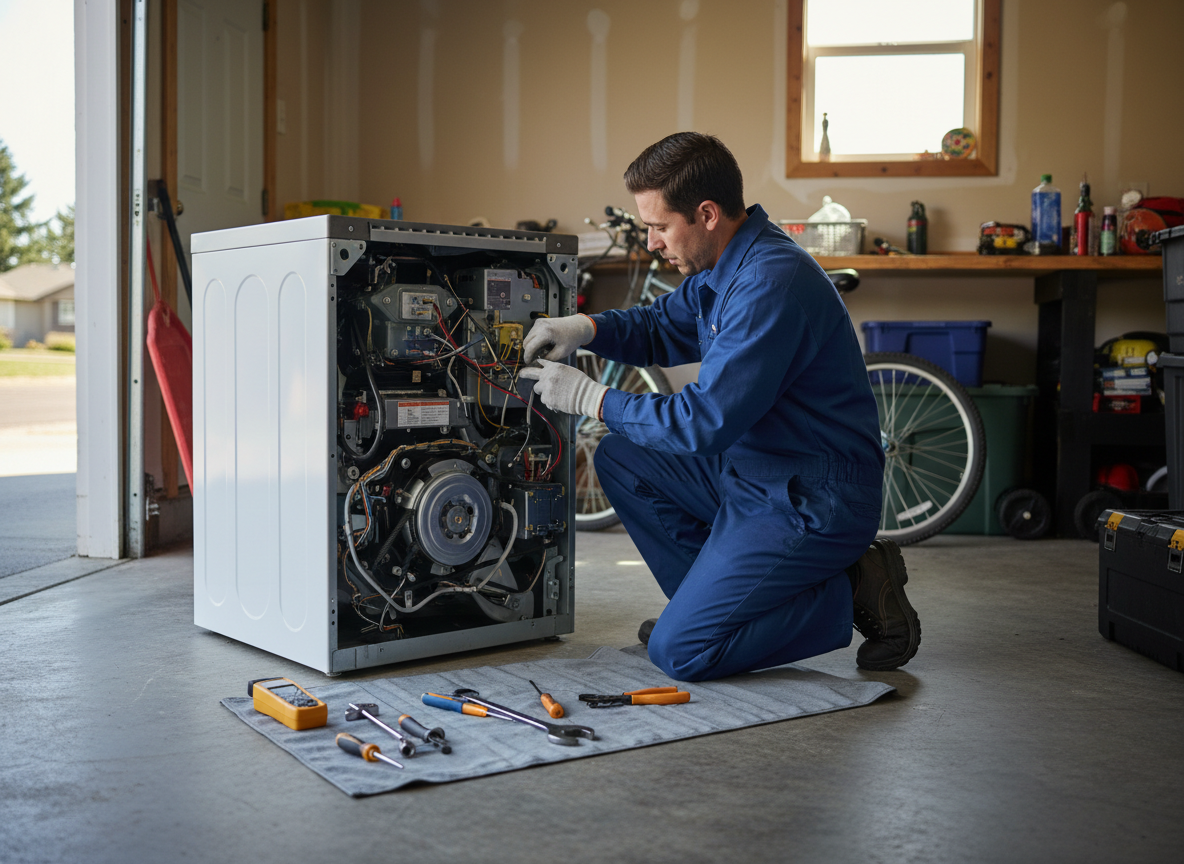
Diagnosis starts with running the machine through its cycles while checking for error codes, unusual noises, and water flow. Common failure symptoms include failure to drain, excessive vibration during spin, leaking from the door or hoses, and clothes remaining wet at the end of a cycle. Technicians test the drain pump, inlet valves, motor, suspension rods, and control board to pinpoint the cause before any parts are ordered.
Repair versus replace decisions hinge on the machine's age, the cost of the needed parts, and whether the failure is isolated or part of broader wear. In many Spokane homes with machines over ten years old, a single major component failure often makes replacement the more economical choice once labor and parts are added up.
Before the technician arrives, customers should clear a three-foot path to the machine, note any error codes displayed, and have the model number ready. It also helps to know how long the issue has been occurring and whether the machine is still under any manufacturer warranty.
Common Components Tested
Technicians check the drain pump for debris or motor failure, the water inlet valves for proper opening and closing, the drive belt or direct-drive motor for slippage or burnout, and the door boot seal for tears that allow leaks. Suspension rods and shock absorbers are inspected when the machine walks or shakes violently.
What Homeowners Should Prepare
Move laundry baskets and detergent away from the unit, shut off the water supply if accessible, and have a towel ready in case residual water needs to be caught during inspection. Providing the purchase date or service history helps the tech advise on repair versus replacement.
Technician insight
In Spokane, the thing that catches most people out with washing machine repair is the hard water from the aquifer, which builds up quickly in inlet valves and pumps. Homeowners often think the machine needs a new pump when the real issue is scale restricting flow, and that simple distinction changes the job from a full replacement to a quick valve cleaning.
Slow Drain on an Older Top-Load Unit
A Spokane homeowner reported the machine leaving water at the end of every cycle. Inspection showed the drain pump impeller was clogged with mineral scale and lint rather than a failed motor. The pump was disassembled, cleared, and reinstalled. The machine now completes full cycles without standing water.
Washing Machine Repair Services We Offer
✓Drain Pump Repairs
Restores proper drainage by clearing clogs or replacing faulty pumps so cycles finish without standing water.
✓Motor and Belt Service
Addresses no-spin or slow-agitation problems by testing and replacing worn motors, belts, or couplings.
✓Door Seal and Latch Fixes
Stops leaks and error codes by replacing torn door boots or faulty lid switches and latches.
✓Water Inlet Valve Repairs
Corrects slow fill or overflow issues through cleaning or replacement of inlet valves affected by mineral deposits.
✓Suspension and Balancing Adjustments
Reduces vibration and walking by inspecting and replacing worn suspension rods or leveling the unit on uneven floors.
✓Control Board Diagnostics
Identifies electronic failures that cause incorrect cycle behavior and determines whether board repair or replacement is needed.
How it works
- 1
On-Site Assessment
The technician inspects the machine, runs diagnostic cycles, and checks for error codes and visible wear.
- 2
Component Testing
Each suspected part is tested with a multimeter or by hand to confirm the exact failure point.
- 3
Repair or Replacement Decision
Parts and labor costs are reviewed with the homeowner so an informed choice can be made before work begins.
- 4
Final Testing and Cleanup
The machine is run through a full cycle after repair, leaks are checked, and the work area is left tidy.
Pricing
Cost depends on the parts required and the complexity of the repair; a diagnostic visit determines the exact scope before any work is authorized.