
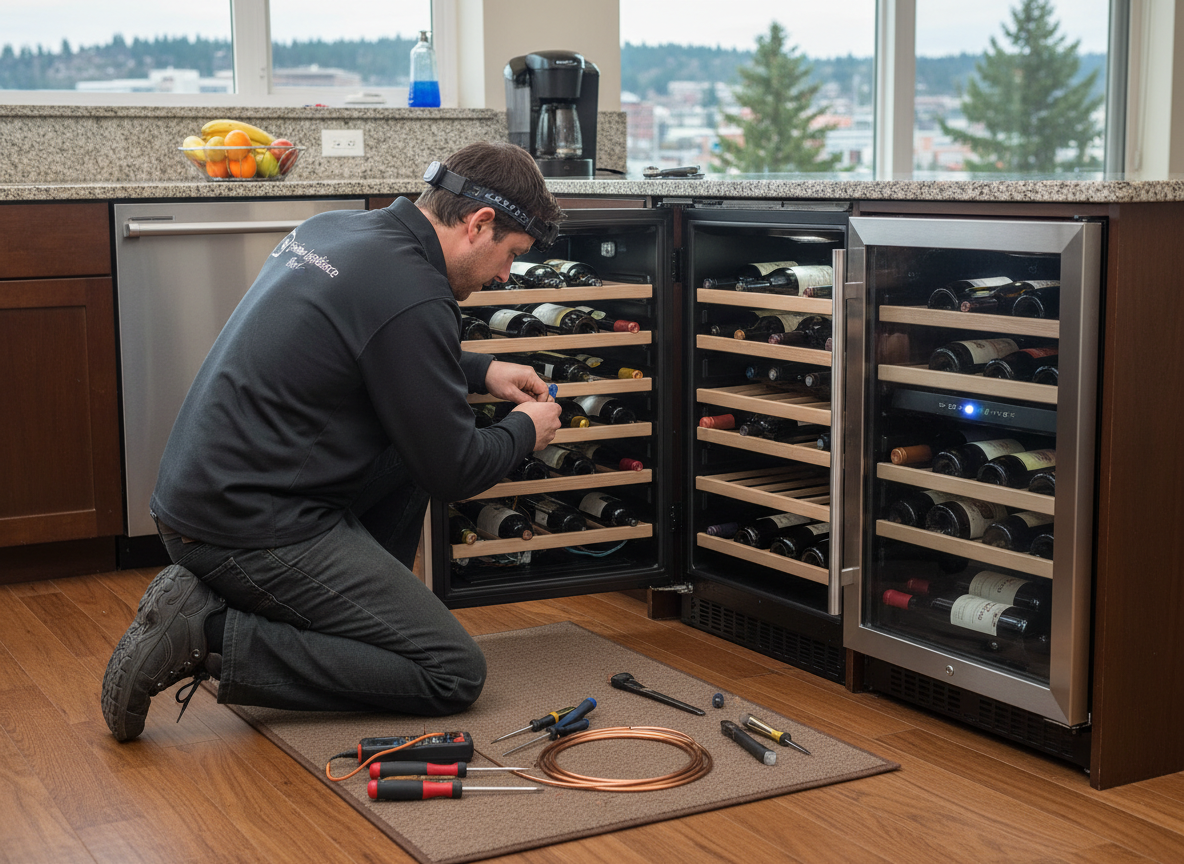
Diagnosis starts with checking power supply and temperature settings, then moves to listening for compressor operation and inspecting for frost patterns or error codes. Common failure symptoms include units that run constantly yet fail to reach proper chilling levels, strange rattling from fans, or leaks around the door area. Components that may require testing include the compressor, thermostat, evaporator and condenser fans, start relays, and door gaskets. Repair-versus-replace decisions hinge on the age of the unit and the cost of major parts like a new compressor compared with purchasing a replacement appliance. Before service, customers should clear space around the unit for access, note any recent error codes or temperature readings, and have the model number ready.
Common Symptoms and Testing Points
Homeowners often notice wine coolers that stop maintaining 45-65 degree ranges or develop condensation inside the cabinet. Technicians test capacitors for proper microfarad readings, verify fan motor continuity, and measure refrigerant pressures where accessible without specialized recovery equipment.
Repair or Replace Guidance
When the compressor has failed on an older model, replacement often makes more sense than repair. Newer units with electronic controls sometimes benefit from targeted fixes such as board replacement or sensor calibration instead of full disposal.
Technician insight
In Spokane, the thing that catches most people out with Wine Cooler Repair is how our dry winters and older single-story homes let fine dust build up quickly on condenser coils, shortening compressor life if the unit sits in a utility room with poor airflow.
Constant Running but Warm Cabinet
The wine cooler maintained power yet stayed several degrees above set point. Testing revealed a failing condenser fan motor clogged with household dust typical in Spokane basements. The motor was replaced and coils cleaned, restoring normal cycling and temperature control.
Wine Cooler Repair Services We Offer
✓Compressor Testing
Checks compressor operation and electrical draw to determine if the cooling cycle can be restored without full replacement.
✓Thermostat Calibration
Adjusts or replaces the temperature control to restore accurate chilling across the cabinet zones.
✓Fan Motor Inspection
Tests evaporator and condenser fan motors for noise, speed, and bearing wear that affects airflow.
✓Door Seal Replacement
Measures gasket integrity and installs new seals to stop cold air loss and reduce run times.
✓Condenser Coil Cleaning
Removes dust and pet hair buildup that restricts heat exchange and causes overheating shutdowns.
How it works
- 1
Initial Symptom Review
Technician discusses observed issues and checks basic settings and power supply.
- 2
Component Testing
Multimeter checks, visual inspection, and operational tests on compressor, fans, and controls.
- 3
Findings and Options
Clear explanation of needed repairs versus replacement with parts and labor factors outlined.
- 4
Repair Completion
Parts installed, system retested for temperature stability, and customer shown results.
Pricing
Cost depends on parts required such as fans or thermostats versus major items like compressors, plus time for testing and access in the home.